
Does ASTM E84 meet NFPA 701? Not on its own. A Class A flame spread rating looks great on a submittal, but it still isn’t NFPA 701. Here’s why the two tests don’t substitute for each other, and how to make sure your plastic sheeting passes the one your inspector actually asks for.
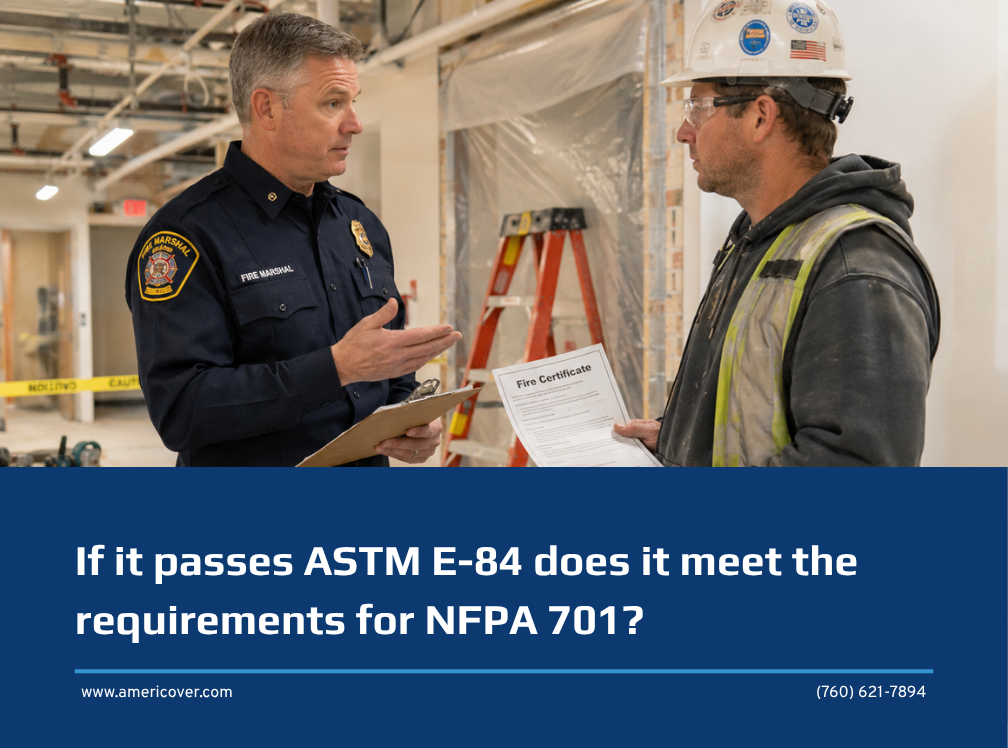
Here’s a scene that plays out on renovation jobs every week. The dust barriers are up in an occupied hospital wing. The submittal shows ASTM E84 Class A. Then the fire marshal walks the corridor and asks for the NFPA 701 report.
The crew assumed Class A covered it. However, it doesn’t. As a result, your project is on hold until someone produces the right paperwork, or until the sheeting comes down.
So, does a material that passes ASTM E84 meet NFPA 701? No. They are separate tests that measure different fire behavior. In other words, a passing result on one tells you nothing certain about the other.
What Is ASTM E84?
ASTM E84 is the Standard Test Method for Surface Burning Characteristics of Building Materials. Specifically, its scope covers exposed surfaces such as walls and ceilings.
The specimen is mounted in the ceiling position of a long horizontal tunnel, face down toward the flame. Then lab technicians measure how far the flame travels across the surface and how much smoke the material gives off.
The results come out as two numbers: a Flame Spread Index and a Smoke-Developed Index. Next, building and fire codes sort those numbers into classes. Under the International Code Council family of codes (see Section 803.1.2 as adopted in the Seattle Fire Code):
- Class A: flame spread index 0–25, smoke-developed index 0–450
- Class B: flame spread index 26–75, smoke-developed index 0–450
- Class C: flame spread index 76–200, smoke-developed index 0–450
What Is NFPA 701?
NFPA 701 is the Standard Methods of Fire Tests for Flame Propagation of Textiles and Films. In particular, it was written for materials that hang: curtains, drapes, tarps, tents, and the plastic sheeting you use for partitions and dust barriers.
The specimens hang vertically. First, a flame is applied to the bottom edge and then removed. The test then records how the material behaves:
- How long it keeps burning after the flame is removed
- How much of the specimen is consumed (mass loss or char length, depending on the method)
- Whether burning drips and fragments keep burning once they hit the floor
In addition, NFPA 701 has two test methods. Test Method 1 covers lighter materials, up to 700 g/m² (about 21 oz/yd²). Test Method 2 covers heavier and multilayer materials. Also, it’s pass/fail. For this reason, there’s no Class A in NFPA 701.
Why Passing ASTM E84 Doesn’t Meet NFPA 701
A sheet can meet ASTM E84 Class A and still fail NFPA 701. That’s because the big difference is orientation. Flame behaves differently on a horizontal ceiling than on a hanging sheet.
On a vertical sheet, heat rises straight into unburned material above the flame. In fact, that’s the worst case for a dust curtain or a partition, and it’s exactly what NFPA 701 simulates. However, ASTM E84 never puts a sample in that position.
Second, the two tests handle melting very differently.
The codes also treat the two tests as separate requirements. For example, interior wall and ceiling finish is classified by ASTM E84. On the other hand, combustible decorative materials, curtains, and draperies must meet the flame propagation criteria of NFPA 701 Test Method 1 or Test Method 2 (Section 807.3, Seattle Fire Code, based on the IFC).
Which One Does Your Job Need?
Start with the spec and the Authority Having Jurisdiction (AHJ). After all, whatever standard they name is the one your paperwork has to show.
Here’s how it usually breaks down in the field:
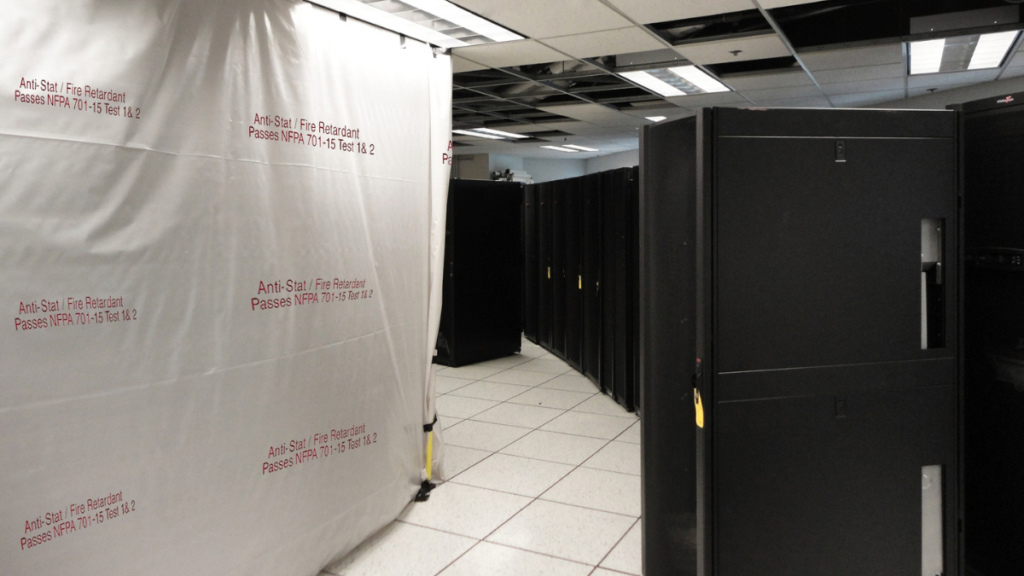
- Dust barriers, containment curtains, and temporary partitions in occupied buildings: NFPA 701 is the common ask, especially in healthcare, schools, and assembly spaces. See our guide to fire-retardant dust containment barriers.
- Tents, event structures, stage backdrops, and drapery: NFPA 701.
- Sheeting that stays in place as a wall or ceiling surface, like a ceiling vapor barrier over insulation: ASTM E84 classification often governs, and many specs call for both.
For specifiers: Name both the ASTM E84 and NFPA 701 standards when the material will hang during construction and stay in place afterward. Also name the NFPA 701 test method. Otherwise, generic language like “fire-retardant poly” gives the contractor room to submit the wrong report.
For contractors: Ask when ordering if your material shipment includes a fire certificate, not after the inspector shows up. Then check that the product name on the certificate matches the roll on your truck.
Americover Sheeting That Can Meet ASTM E84 and NFPA 701
Above all, the simplest fix is to use sheeting documented to meet ASTM E84 and NFPA 701 on separate test reports. Every product below is made in the USA and lists both NFPA 701 and ASTM E84 on its product page. They’re ordered by type (string-reinforced, then antistatic, then plain poly) and from thickest to thinnest:
| Product | Image | Top Fire-Retardant Applications | Link |
|---|---|---|---|
| String-Reinforced Fire-Retardant Sheeting | |||
| 14 Mil Tuff-Scrim™ Fire Retardant Reinforced Poly Sheeting | 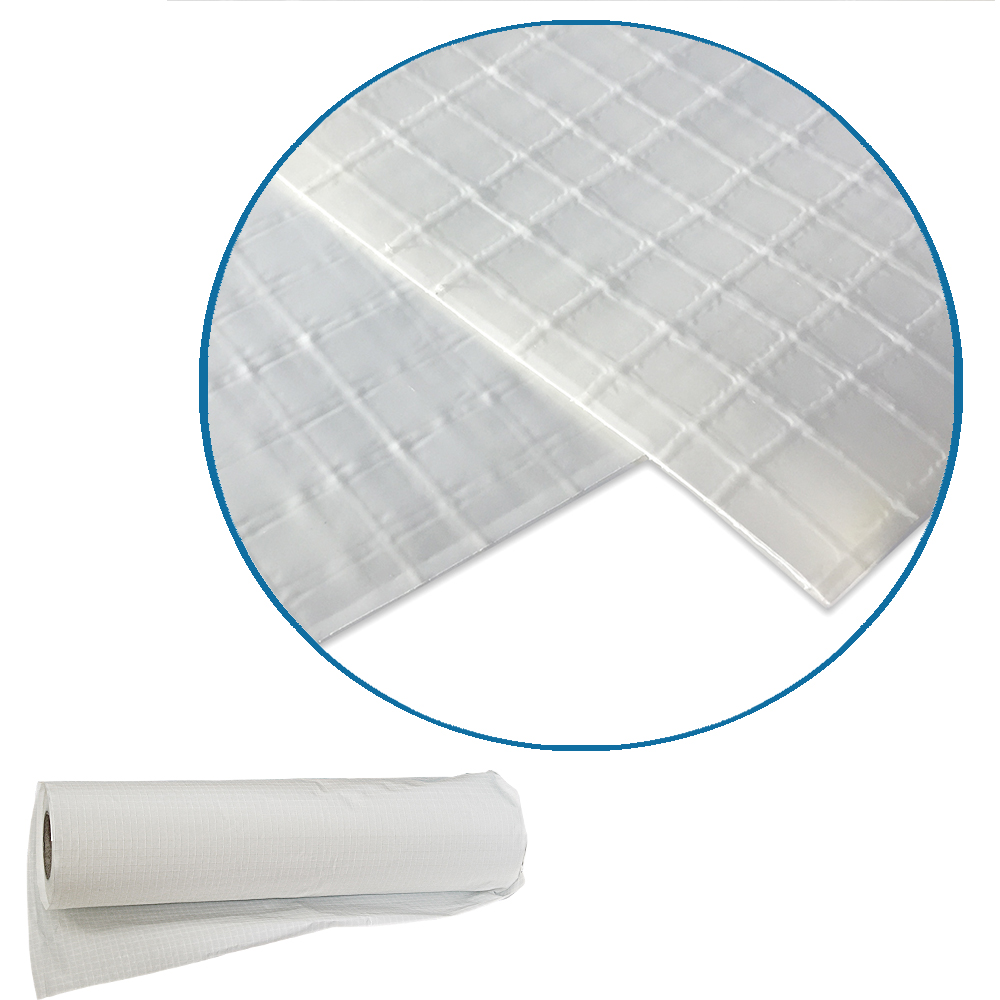 |
Fire-rated ceiling and in-wall vapor barriers, insulation cover, and heavy-duty wall cover where Class A flame spread is specified | View product → |
| 10 Mil Dura Skrim® Fire Retardant Reinforced Plastic Sheeting | 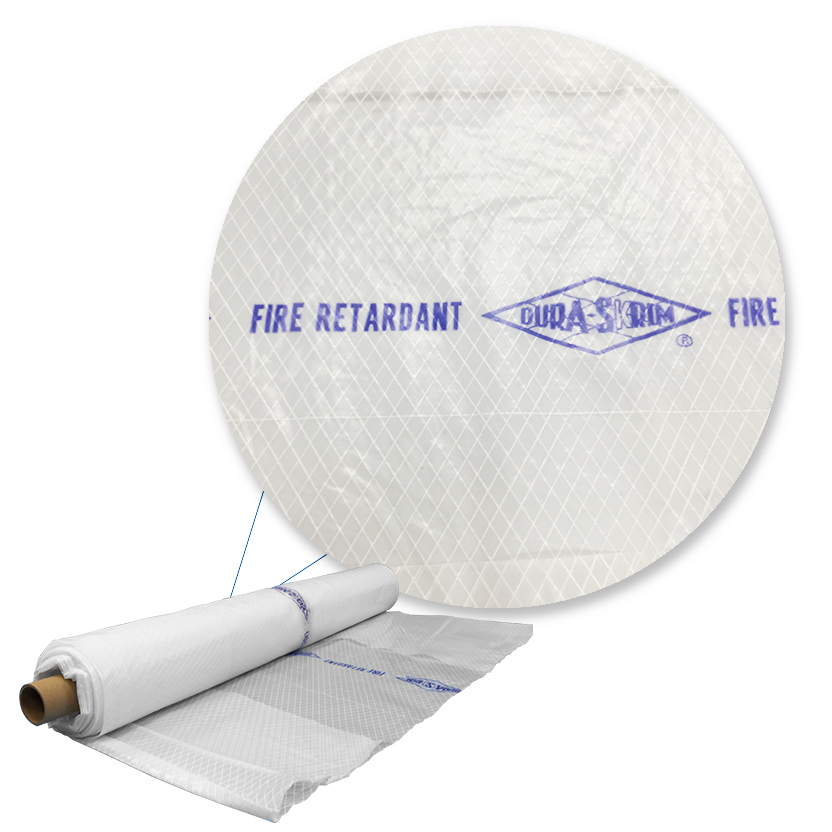 |
Asbestos, lead, and mold abatement; negative-pressure containment; hot work protection; interior containment in occupied buildings | View product → |
| 8 Mil Tuff-Scrim™ Fire Retardant Reinforced Poly Sheeting | 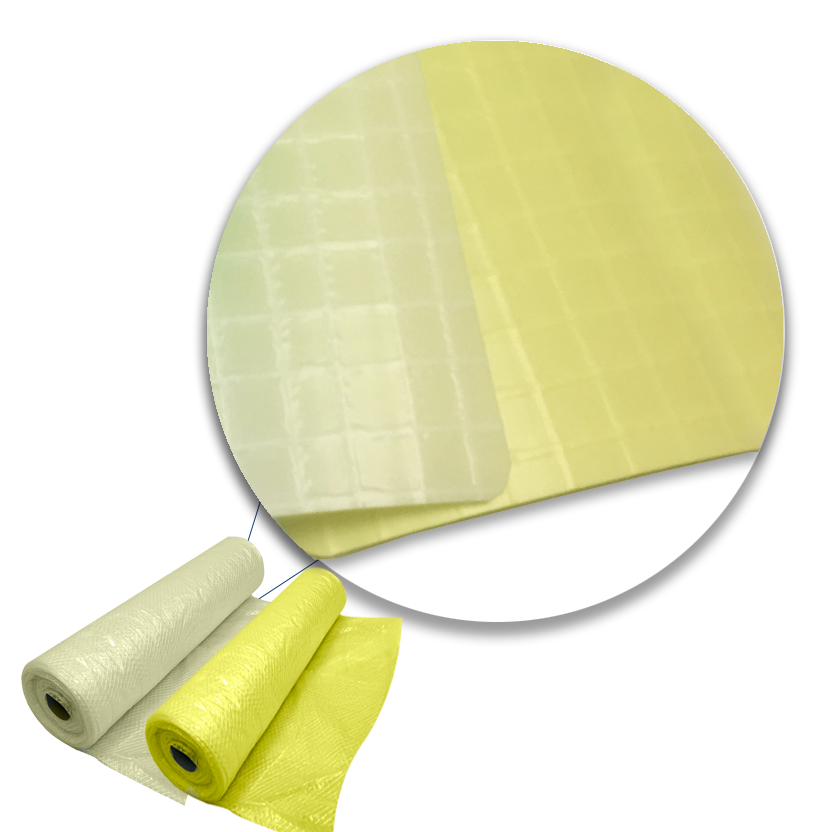 |
Building covers and encapsulation, fire-rated ceiling vapor barriers, insulation cover, fire safety sheeting | View product → |
| 6 Mil Dura Skrim® Fire Retardant Reinforced Plastic Sheeting | |
Warehouse and hangar ceiling liners, data center and clean room ceilings, abatement and remediation containment | View product → |
| 6 Mil Tuff-Scrim™ Fire Retardant Reinforced Poly Sheeting | 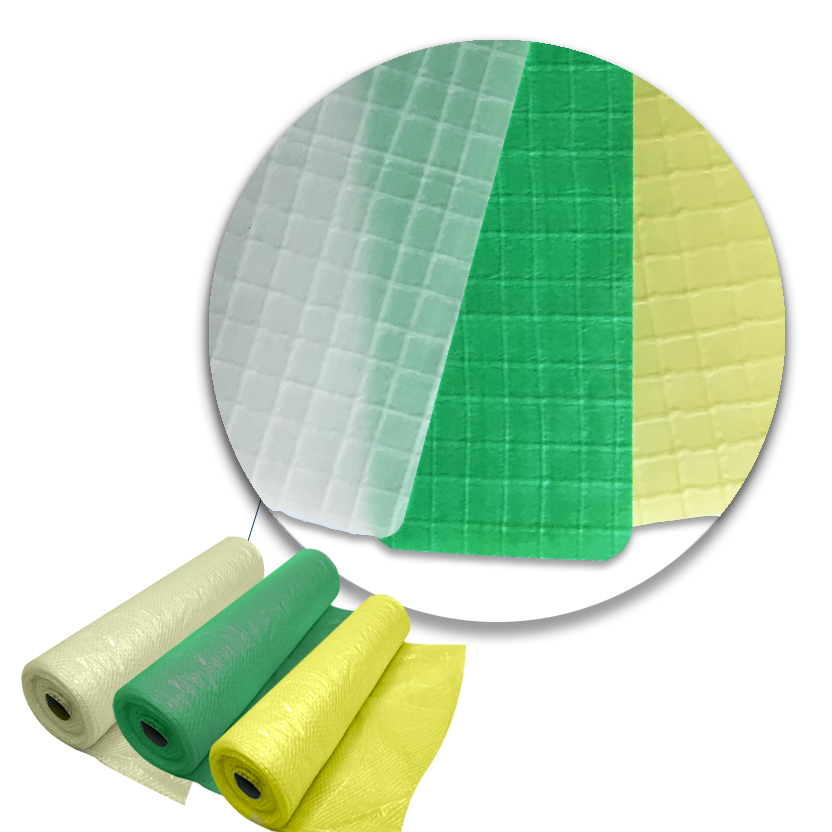 |
Renovation dust containment around electronics, fire-rated ceiling and wall cover, insulation cover | View product → |
| Antistatic Fire-Retardant Sheeting (ASFR) | |||
| Tuff-Scrim™ Antistatic Fire Retardant Reinforced Poly Sheeting (6 mil) | 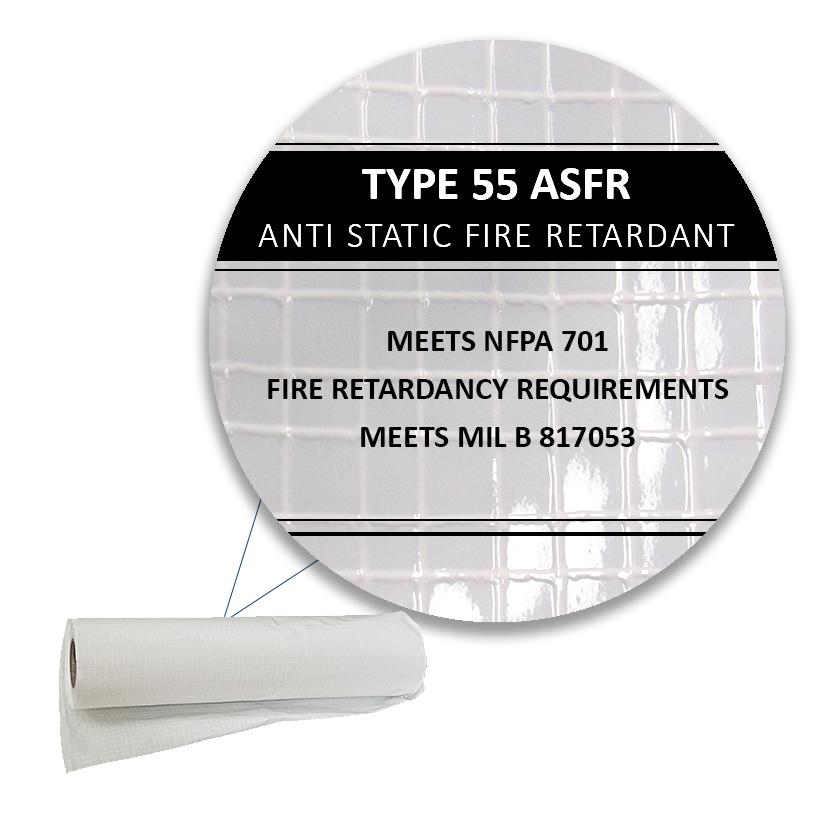 |
Healthcare renovation (meets NFPA 99 minimums), data center and telecom covers, dust containment near sensitive equipment | View product → |
| ASFR6 Antistatic Fire Retardant Plastic Sheeting (6 mil) | 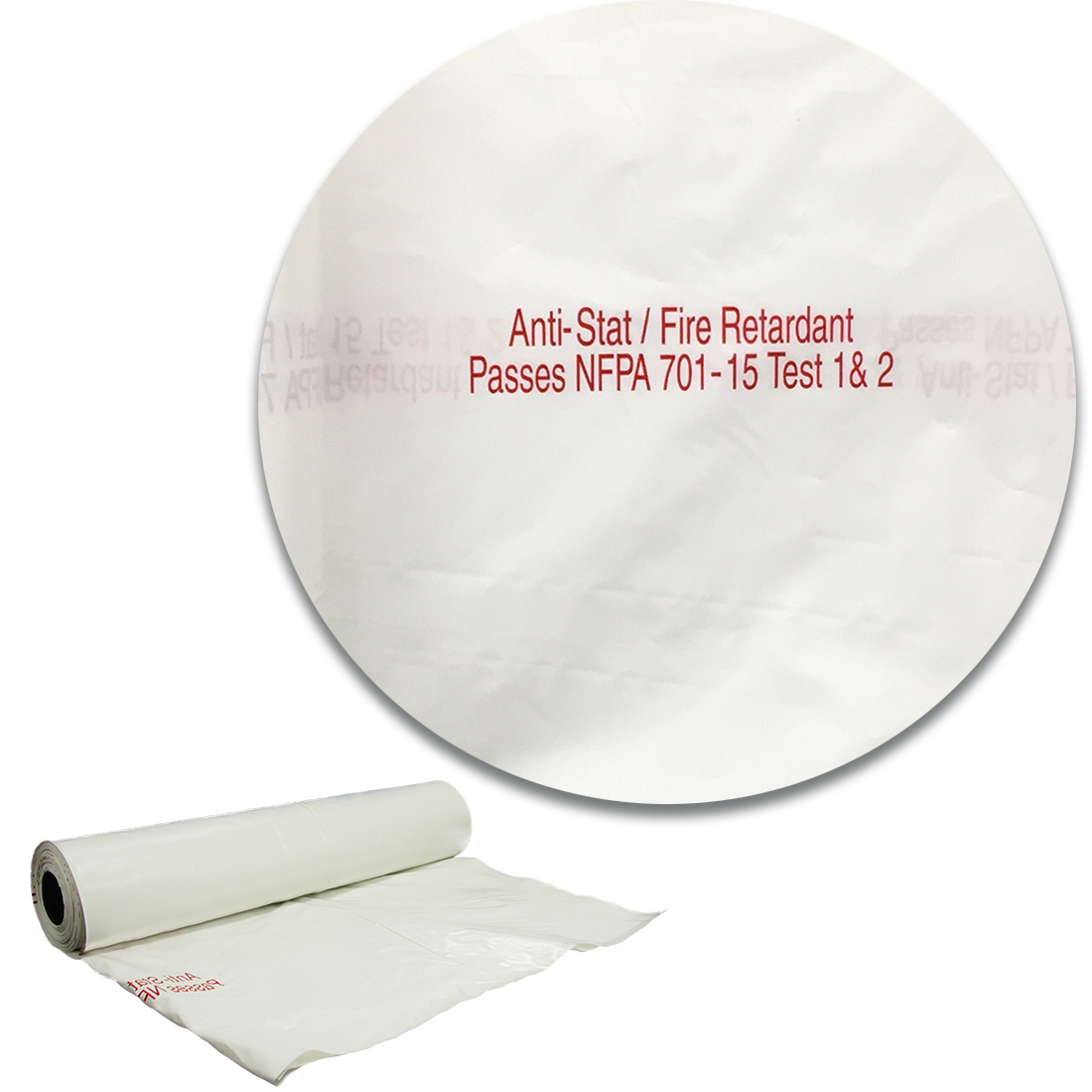 |
Healthcare and ICRA containment, data centers and server rooms, cleanrooms and labs, renovation barriers in occupied buildings | View product → |
| Fire-Retardant Poly Sheeting | |||
| 8 Mil Black Fire Retardant Plastic Sheeting | 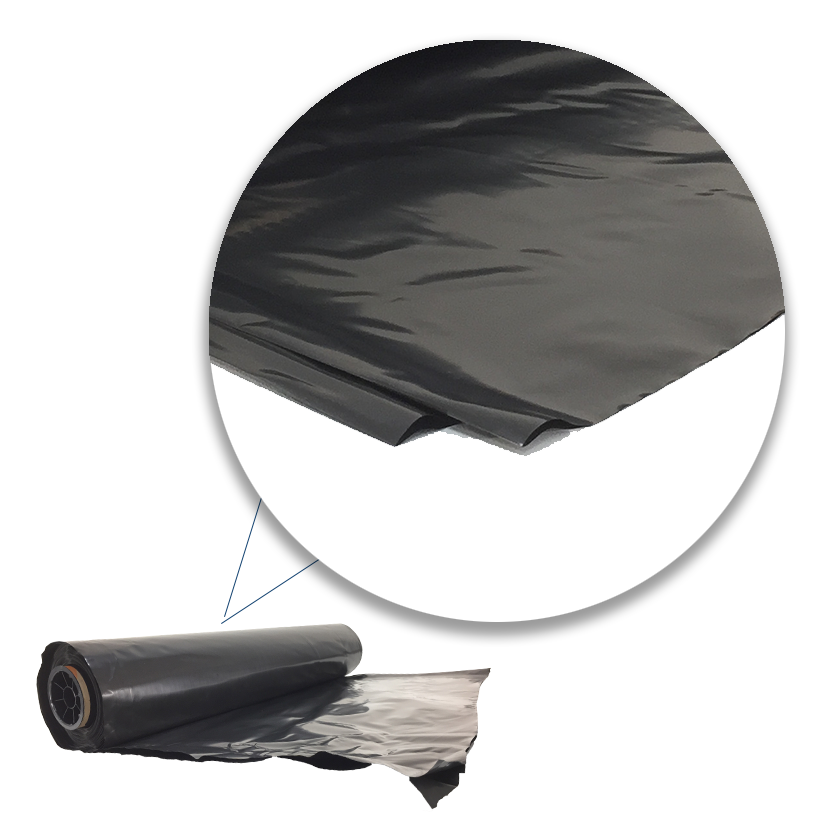 |
Blackout enclosures, production set liners, event and haunted-house builds, aerospace and manufacturing containment (also meets California Title 19) | View product → |
| 4 Mil Black Fire Retardant Plastic Sheeting | |
Partition curtains, temporary walls, indoor dust barriers, blackout and privacy screening (also meets California Title 19) | View product → |
| 4 Mil White Fire Retardant Plastic Sheeting | 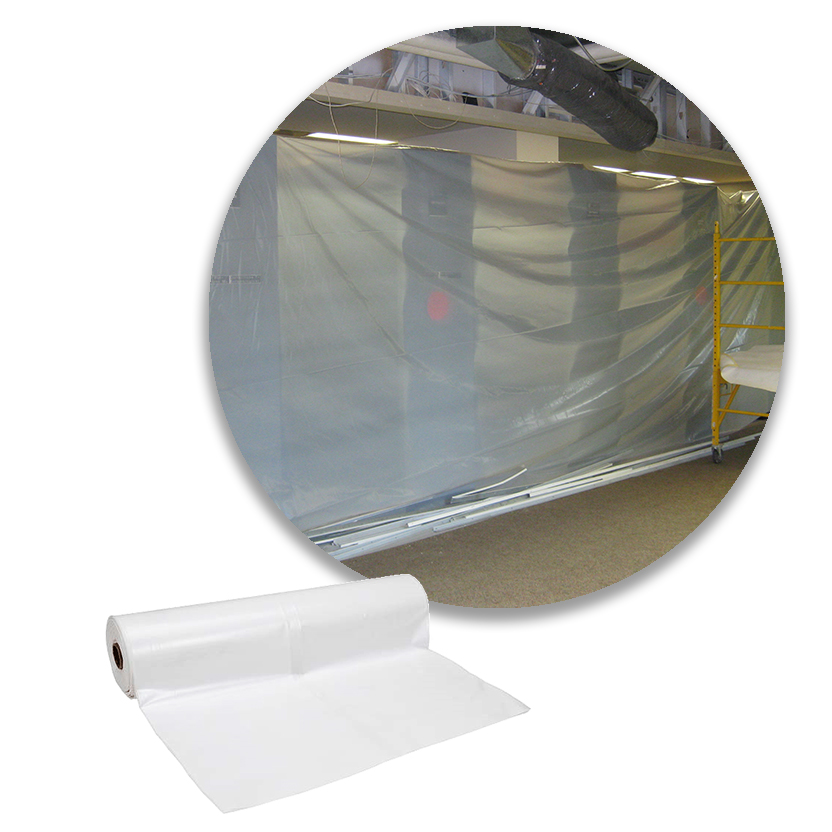 |
Light-duty dust barriers, temporary enclosures, and jobsite containment where fire-rated protection is required | View product → |
Finally, don’t forget the seams. Standard duct tape carries no fire rating and adds an uncertified material to a certified barrier. Seal panels with a fire-retardant tape so the whole assembly holds up to inspection.
For a deeper look at the standards themselves, read What Is the NFPA 701? and All About Fire Tests and Certifications. Similarly, if “retardant” versus “resistant” is also causing confusion on your job, see Fire Retardant vs. Fire Resistant for Plastic Sheeting.
Frequently Asked Questions
Does plastic sheeting that passes ASTM E84 meet NFPA 701?
No. Passing ASTM E84 does not meet an NFPA 701 requirement. ASTM E84 measures surface flame spread and smoke with the sample mounted horizontally, while NFPA 701 tests how a hanging film or fabric burns and drips. A material has to be tested to NFPA 701 to claim NFPA 701 compliance.
Which fire test do fire marshals usually require for containment sheeting?
For dust barriers, partitions, and containment curtains in occupied buildings, NFPA 701 is the common requirement. Still, always confirm with the project spec and the local AHJ, since some jobs call for both NFPA 701 and ASTM E84.
What’s the difference between NFPA 701 Test Method 1 and Test Method 2?
Test Method 1 applies to lighter materials, up to 700 g/m² (about 21 oz/yd²). Test Method 2, however, applies to heavier and multilayer materials. Either way, your test report should name the method your spec requires.
Is ASTM E84 Class A better than NFPA 701?
They aren’t comparable. Class A is the best result on a surface flame spread test, and NFPA 701 is a pass/fail test for hanging materials. Neither one outranks the other. Instead, they answer different questions.
Can one plastic sheeting product meet both ASTM E84 and NFPA 701?
Yes. Several Americover fire-retardant products, including Dura Skrim® FR, Tuff-Scrim™ FR, 4 mil white FR, and ASFR6, are documented to meet both ASTM E84 and NFPA 701. Even so, check the product page and certificate for the exact test method and class.
Get the Right Fire Rating on the First Submittal
In short, don’t let a paperwork mismatch stall your job. Americover supplies American-made sheeting documented to meet ASTM E84 and NFPA 701, plus matching tape and the fire certificates your AHJ will ask for.
Shop fire-retardant plastic sheeting and request certificates →