

It’s never too early to start your haunted house build
We’ve all likely heard of Christmas in July—but Halloween? The ghouls and goblins of October usually stay out of sight until fall, but if you’re serious about building a haunted attraction, Haunted House Planning starts long before the first pumpkin hits the porch.
Whether you’re a homeowner building a DIY haunt, a school or nonprofit planning a fundraiser, or a contractor running a commercial attraction, you can’t decide in October and—poof—a fully built haunted house appears. If you want a legitimate operation that passes inspection and keeps guests safe, the earlier you plan, the smoother your build, your permits, and your opening night.
Here’s a practical Haunted House Planning guide that works for DIYers, event planners, and professional haunters alike.
What you’ll need for haunted house planning
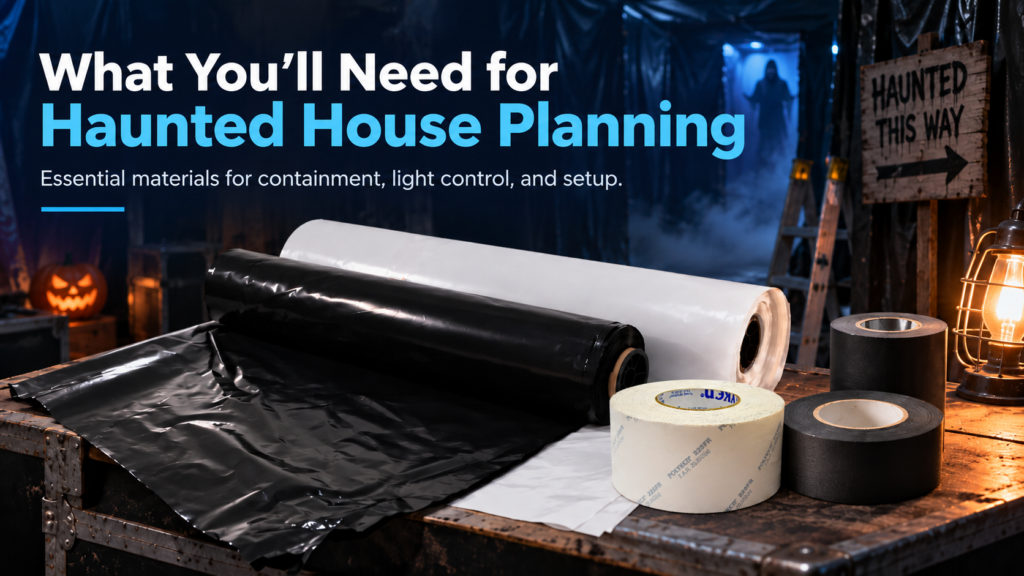
Before you start sketching scenes or buying fog machines, list out the core pieces of your project. Haunted House Planning is easier when you treat your attraction like a small construction job.
- Location: Home, school gym, warehouse, parking lot tent, or commercial building.
- Layout concept: Straight walkthrough, maze, or room-by-room “house” experience.
- Theme: Classic haunted mansion, hospital, cornfield, movie-inspired, or story-driven.
- Fire-retardant wall material: 4 mil black fire retardant plastic sheeting or 8 mil black fire retardant plastic sheeting for blackout walls.
- Shadow and prop material: 4 mil white fire retardant plastic sheeting for silhouettes and blood-splatter sets.
- Fire-retardant tape: 268FR black fire retardant tape and 225FR white fire retardant tape for seams and edges.
- Electrical and effects: Surge-protected power strips, extension cords, lighting, sound, fog, animatronics.
- Safety documents: Site plan, floor plan, safety plan, and evacuation plan for permits and fire inspection.
Before you start: design the experience, not just the walls
When it comes to distinguishing a true haunted house experience from a popup tent with a few decorations, the difference is in the details. Haunted House Planning starts with how you want people to feel, not just where you’ll hang plastic.
Ask yourself:
- Visitor control: How will you control the visitor experience? Single-file line, small groups, or timed entries?
- Emotional arc: Do you want slow-building tension, jump scares, or a mix of both?
- Layout: Will it be a haunted maze with tight corridors, or set up more like an actual house with rooms?
- Theme: Is it based on a scary story, a horror movie, or a custom narrative your team creates?
Once you have the concept, map out the build:
- Find a suitable location: Confirm access, power, parking, and restrooms.
- Choose and source building materials: Fire-retardant plastic sheeting, tape, framing (PVC, wood, or both).
- Design costumes and props: Match your theme and plan storage and quick-change areas.
- Cast characters: Actors, guides, and safety staff who understand the layout and emergency procedures.
- Create special effects: Lighting, sound, fog, projections, and animatronics.
- Build your documentation: Site plan, floor plan, safety plan, and evacuation plan for the permit process.
Expert insight: when you design your layout, sketch your exits and staff positions first, then layer scares on top. It’s easier to add props to a safe path than to retrofit safety into a maze that was built only for fear.
Step 1: Understand permits and local rules
Whether you plan to lease your site for a one-time event or purchase a location to start a haunted attraction business, you’re responsible for obtaining the authority to operate. Haunted House Planning that ignores permits usually ends with delays—or shutdowns.
Every city has its own regulations and guidelines for temporary haunted house attractions, often classified as “special amusement buildings” under fire code. You may need multiple permits from different agencies.
Common operational requirements include:
- Zoning: Is your location allowed to host an amusement or event?
- Safety: Fire code compliance, emergency lighting, exit signage.
- Maintenance: Clean, safe walkways and structural stability.
- Parking: Enough space for visitors and emergency vehicles.
- Sound: Noise limits for residential or mixed-use areas.
- Sewage disposal: If you’re adding portable restrooms or food service.
Before you build anything, check your city or county website for haunted attraction or amusement building guidelines. Starting permit conversations early is part of smart Haunted House Planning.
Step 2: Plan for the fire marshal from day one
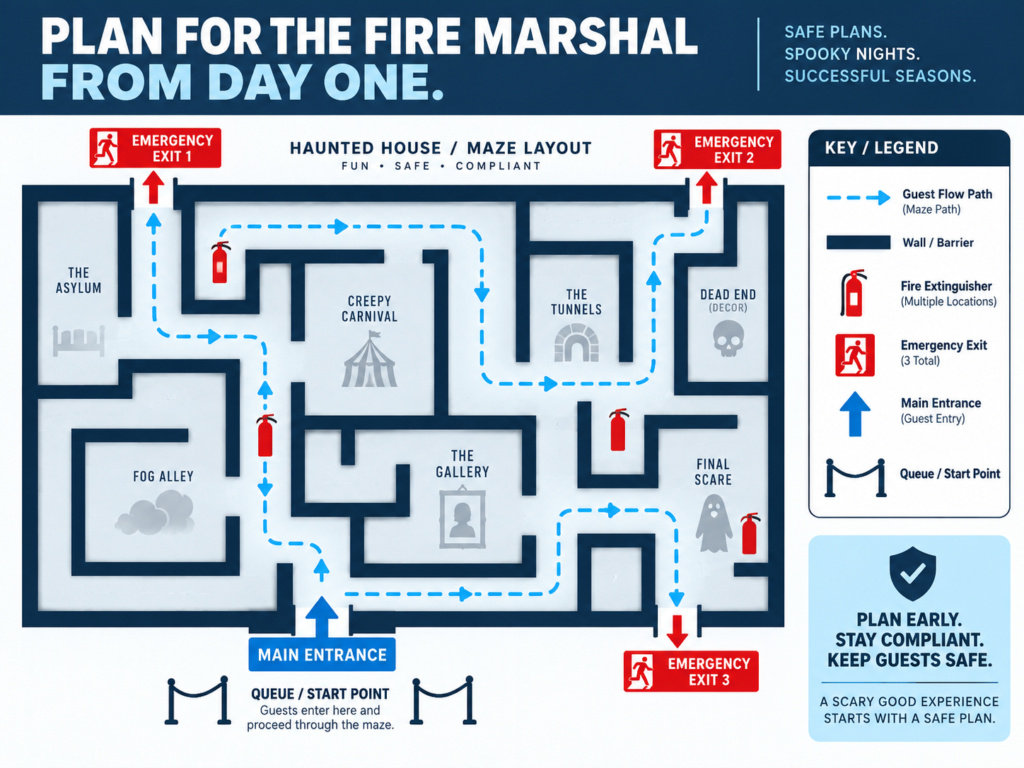
Haunted attractions have seen multiple fatalities over the years, including the Six Flags Haunted Castle fire in 1984, which led to stricter regulations for haunted houses and amusement buildings. Before you open your attraction to the public, you’ll need a fire inspection—and if a life safety violation is discovered, the fire marshal can shut down your event on the spot.
Key fire safety considerations:
- Fire-retardant wall material: Use haunted house plastic that meets NFPA 701 and ASTM E84 Class A, not generic garbage bags or non-rated poly.
- Documented ratings: Keep fire certificates and spec sheets in your permit binder for inspection day.
- Clear exits: Mark exits with lighting and signage; avoid props that block or narrow escape paths.
- Electrical safety: Use surge protectors, avoid overloading circuits, and keep cords off walking surfaces.
- Staff training: Make sure every actor knows how to stop the show and guide guests out in an emergency.
Using fire marshal-approved haunted house plastic sheeting minimizes some of the headache associated with the fire inspection process, because flame retardance is inherent to the material and backed by documentation.
Expert insight: many fire marshals will look at your seams and tape as closely as your walls. If you use non-rated duct tape on rated plastic, you’ve introduced an uncertified material into the assembly—and that can trigger a fail even when the sheeting itself passes.
Step 3: Choose the right haunted house plastic and tape
Not all plastic sheeting is created equal. Store-bought garbage bags and non-rated poly can burn, melt, and drip in a fire, causing flames to spread rapidly. Fire-retardant plastic from Americover is engineered to self-extinguish, slowing the spread of fire and minimizing burn damage.
Here’s how core haunted house materials fit into your Haunted House Planning:
- Black fire retardant plastic sheeting: Creates blackout walls, tunnels, and ceilings so guests can’t see what’s coming next.
- White fire retardant plastic sheeting: Builds shadow screens, projection surfaces, and blood-splatter scenes.
- Fire-retardant tape: Seams panels together, seals edges to floors and ceilings, and patches cuts without compromising fire performance.
| Product | Image | Key Spec | Link |
|---|---|---|---|
| 4 Mil Black Fire Retardant Plastic Sheeting | 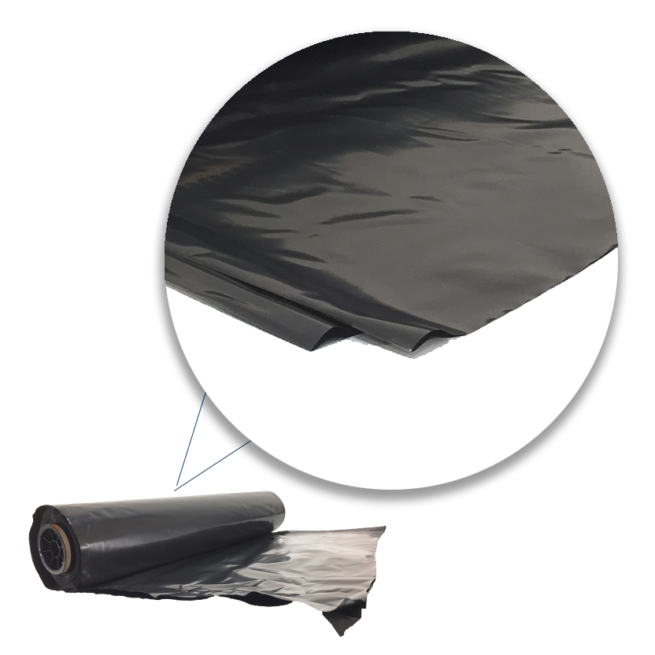 |
Meets NFPA 701 and ASTM E84 Class A; blackout film for haunted house walls. | View product → |
| 8 Mil Black Fire Retardant Plastic Sheeting | |
Thicker blackout film for high-traffic maze walls and durable tunnels. | View product → |
| 4 Mil White Fire Retardant Plastic Sheeting | 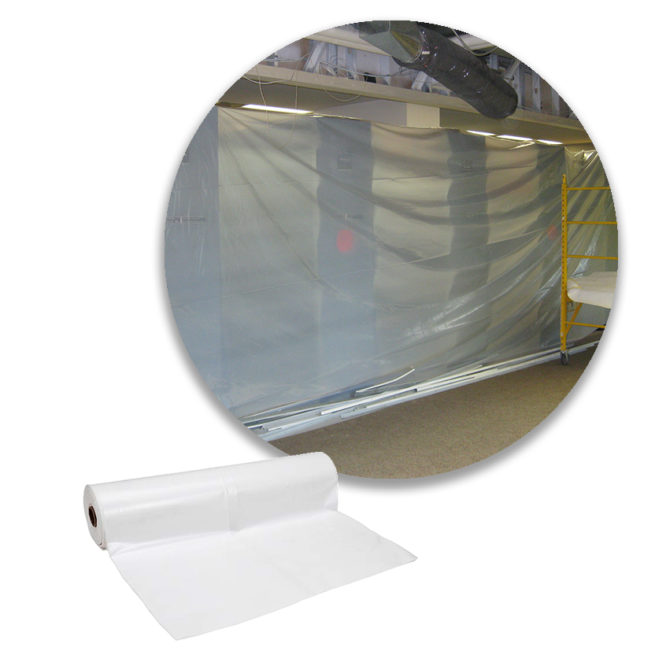 |
Semi-clear film for eerie shadow effects and prop backdrops. | View product → |
| 268FR Black Fire Retardant Tape | 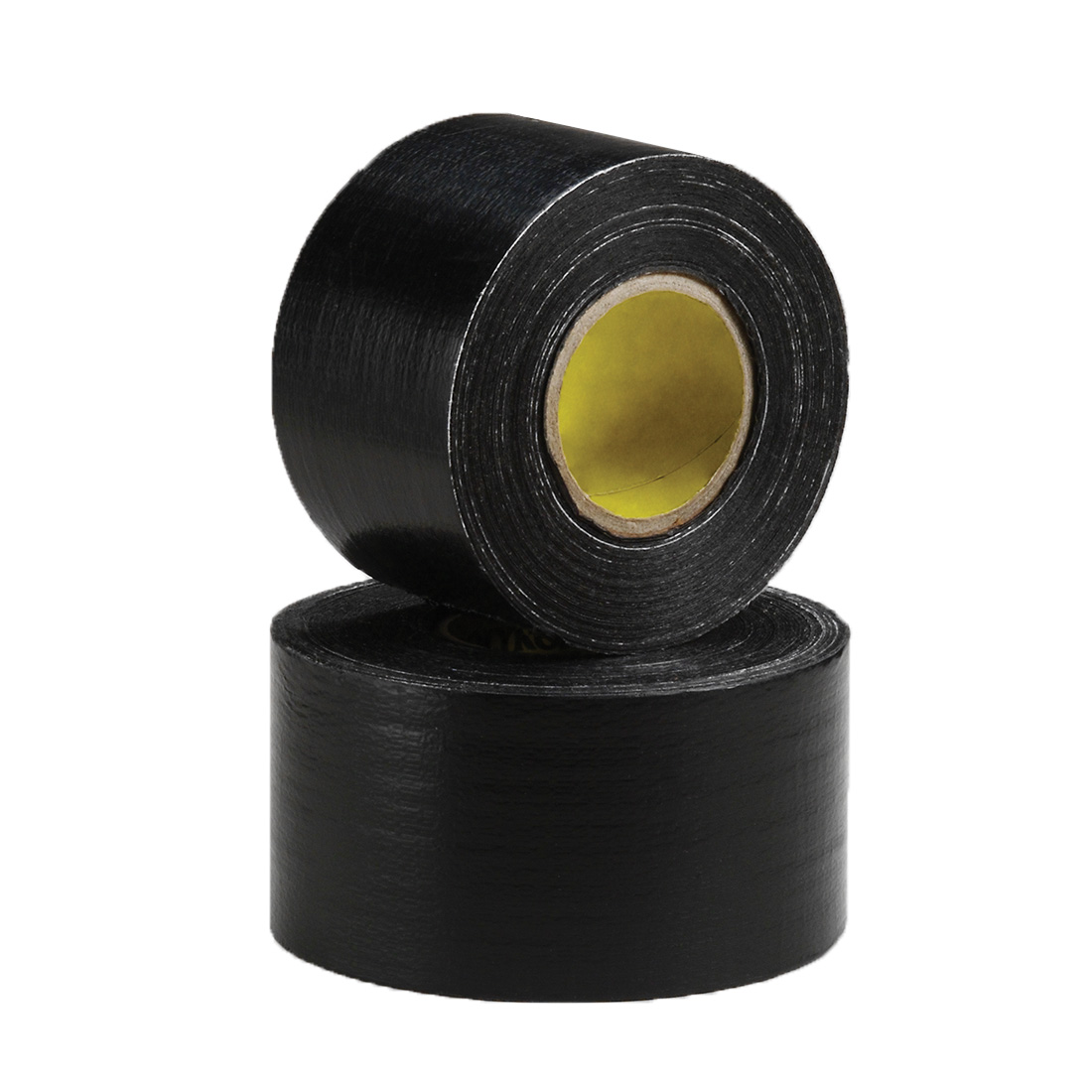 |
Flame-retardant duct tape for seaming black plastic panels. | View product → |
| 225FR White Fire Retardant Tape |  |
Aggressive adhesive for seaming white plastic and bundling wires. | View product → |
Expert insight: black fire-retardant sheeting is ideal for total blackout, but mixing in white fire-retardant sheeting for transition zones gives guests’ eyes a chance to reset. That makes your next dark corridor feel even more intense without adding more strobe lights or fog.
Step 4: Build walls, routes, and safety into your haunted house
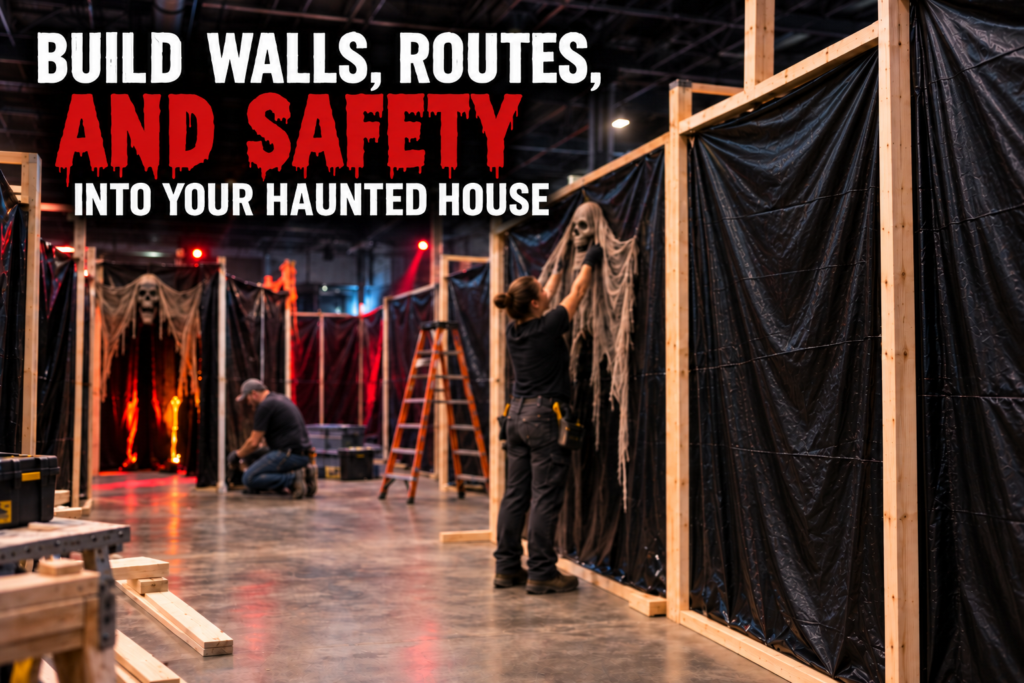
Once permits and materials are lined up, Haunted House Planning moves into framing and installation.
Common wall approaches:
- PVC frames: Lightweight, easy to assemble, ideal for temporary tunnels and maze walls.
- Wooden frames or pallets: Sturdier standalone structures for long-term or outdoor attractions.
- Hybrid PVC and wood: PVC for curves and tunnels, wood for anchor points and doorways.
Installation tips:
- Hang plastic sheeting from the top down: Attach to framing first, then tension and tape at the floor.
- Use fire-retardant tape on every seam: Seam panels together and seal edges to floors, ceilings, and door frames.
- Plan for maintenance: Keep extra sheeting and tape on hand for quick repairs between nights.
- Protect high-traffic corners: Double-layer plastic or use reinforced sheeting where guests brush against walls.
Common haunted house planning mistakes to avoid
Even experienced builders can miss small details that cause big problems later. Here are frequent Haunted House Planning missteps:
- Waiting on permits: Starting paperwork in September for an October opening leaves no room for corrections.
- Using non-rated plastic: Garbage bags and generic poly may look dark enough, but they won’t pass fire inspection.
- Ignoring tape and accessories: Mixing fire-retardant sheeting with non-rated tape or props weakens your overall assembly.
- Overloading circuits: Too many lights and effects on one outlet can trip breakers—or worse.
- Under-planning exits: Narrow, cluttered paths make evacuation harder and can fail inspection.
If you’re sealing a school gym, a warehouse, or a backyard maze, the same rules apply: plan early, build with fire-retardant materials, and keep your documentation ready.
Frequently asked questions about haunted house planning
When should I start haunted house planning for an October event?
For most haunted attractions, start Haunted House Planning in midsummer. That gives you time to secure permits, order fire-retardant materials, build walls and props, and schedule inspections without rushing. Larger commercial haunts often begin planning even earlier.
Do home-based haunted houses need permits and fire inspections?
Many home-based haunted houses are treated as special amusement buildings under local fire codes, especially if you’re inviting the public or charging admission. Check with your local fire marshal and city permitting office to confirm whether your event needs permits, inspections, or specific safety measures.
What type of plastic sheeting should I use for haunted house walls?
Use fire-retardant plastic sheeting that meets NFPA 701 and ASTM E84 Class A, such as Americover’s black fire retardant plastic sheeting. It’s designed to self-extinguish and comes with fire certificates you can show your inspector. Non-rated plastic can burn quickly and may cause you to fail inspection.
Is duct tape acceptable for seaming haunted house plastic sheeting?
Standard duct tape and general-purpose poly tape do not carry fire performance ratings. Using uncertified tape on a certified containment system can cause the fire marshal to reject the installation. Fire-retardant tape compatible with your sheeting maintains the integrity of the entire assembly.
How do I keep my haunted house safe for kids and families?
Design clear paths, avoid trip hazards, use fire-retardant materials, and train staff on emergency procedures. Keep scares intense but controlled, and make sure exits are well-marked and easy to reach. A safe layout is part of good Haunted House Planning, whether your guests are kids, teens, or adults.
Start haunted house planning now with fire-retardant materials
Building a haunted attraction that becomes the talk of the town takes planning, not last-minute panic. Once your layout, permits, and safety plans are in motion, you can focus on what you do best—scaring people in a space that’s safe, compliant, and built to last through the season.