
Best practices, protective films, and jobsite habits contractors use to keep floors damage-free from demolition to final walkthrough.
Whether you’re a seasoned contractor or just starting out, customers notice the floor first when a project wraps. A few construction habits — and the right protective materials — keep floors damage-free. They also stop dust and debris from reaching areas outside the renovation.
Best Construction Practices Also Protect Floors
Most floor damage doesn’t come from one dramatic incident. Foot traffic, dust, and a dropped tool here and there add up over the course of a job. A few habits before you unroll any protective film make everything else easier:
- Plan a demolition route. Map one path from the work area to a roll-off container, inside and out. If the outdoor route tends to get muddy, spread wood chips first to cut the mud crews track back in.
- Build a clean-as-you-go habit. An end-of-day tidy with a shop vacuum or sponge mop stops dust from piling up day after day. It also beats a deep clean at project close.
- Seal and ventilate the work area. This step matters most during demolition. EPA guidance on remodeling and indoor air quality recommends two moves: tape plastic sheeting over doorways and vents, then run exhaust ventilation. A box fan blowing out a window works well and creates a pressure barrier that keeps dust out of occupied rooms.
Match the Right Plastic Sheeting to the Job
Seal the Work Area First
Most residential remodels don’t require fire-retardant sheeting by code, but it’s cheap insurance for the worksite. Americover’s Antistatic Fire Retardant Plastic Sheeting (ASFR6) works well here. It’s 6 mil and meets NFPA 701 for flame resistance. It also doubles as a Class I vapor retarder for jobs that need in-wall moisture control too. Pair it with EasyZip™ HD Zippers for a controlled access point — no fresh slit needed every time someone needs through.
Protect Carpet Two Ways
Not every carpet job needs the same protection. Light-duty jobs — painting, fixture swaps, short punch-list work — call for Carpet Cover Self-Adhesive Carpet Protection: a 3 mil transparent film with a water-based adhesive that won’t discolor carpet fibers. It holds for up to 45 days.
Demolition-heavy jobs with carts, equipment, and heavy foot traffic call for BearAcade® Heavy Duty Carpet Protection Film instead. At 6 mil, it’s twice the thickness of Carpet Cover. It resists mold, moisture, and chemical exposure, and comes in a fire-retardant version. Our BearAcade usage guide covers when to reach for it.
Protect Hard Surfaces
Multi-Surface Cover Self-Adhesive Protection handles tile, hardwood, and countertops. It conforms to the surface on contact, blocks dust and scratches, and releases cleanly for up to 45 days. Use it on granite, marble, laminate, and finished wood — but skip direct sun, since the film lacks UV stabilization.
Film alone won’t stop a dropped hammer or heavy tool. Layer rosin paper, then foam, then Masonite sheets for real impact protection. Just watch for moisture: damp rosin paper can bleed red pigment onto the floor.
Stop Contamination at the Door
Dirty boots dirty clean floors faster than almost anything else on site. Place Sticky Mats™ at every work-area entrance to pull dust and debris off boot soles before it spreads. Peel away a used layer, and a clean sheet waits underneath — 120 layers per refill pack.
Setting one up for the first time? Start with the Sticky Mats™ Starter Kit, which includes the non-slip tray. Reorder the refill pack once you’re set up.
EasyZip™ HD Zippers turn a sheet of plastic into a real door at containment entries. Peel, stick, cut — and you’ve got dual-sided access without tearing down the barrier each time someone needs through.
Protecting floors protects your crew from jobsite contaminants and protects your reputation with the customer. Plan the route, seal the work area, match the material to the job — the floor takes care of itself from there. Call us at 760-388-6294 or email sales@americover.com.
| Product | Image | Key Spec | Link |
|---|---|---|---|
| Antistatic Fire Retardant Plastic Sheeting (ASFR6) |  |
6 mil, NFPA 701, Class I vapor retarder | View product → |
| Carpet Cover Self-Adhesive Carpet Protection |  |
3 mil, up to 45-day adhesion | View product → |
| BearAcade® Heavy Duty Carpet Protection Film |  |
6 mil, 30-day application window | View product → |
| Multi-Surface Cover Self-Adhesive Protection | 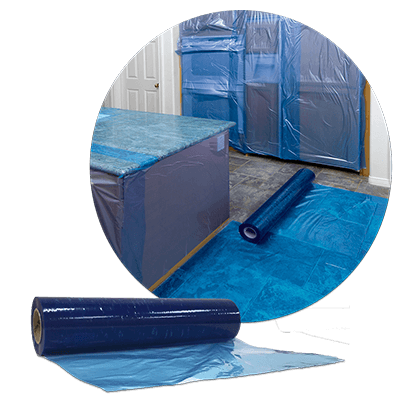 |
3 mil, up to 45-day adhesion, not UV-rated | View product → |
| Sticky Mats™ Refill Pack | 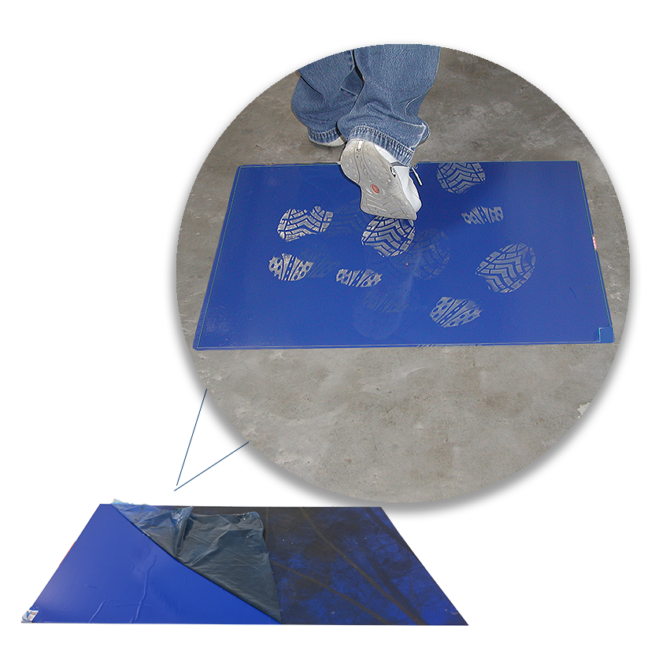 |
4 pads, 120 peel-away layers total | View product → |
| EasyZip™ HD Zippers | 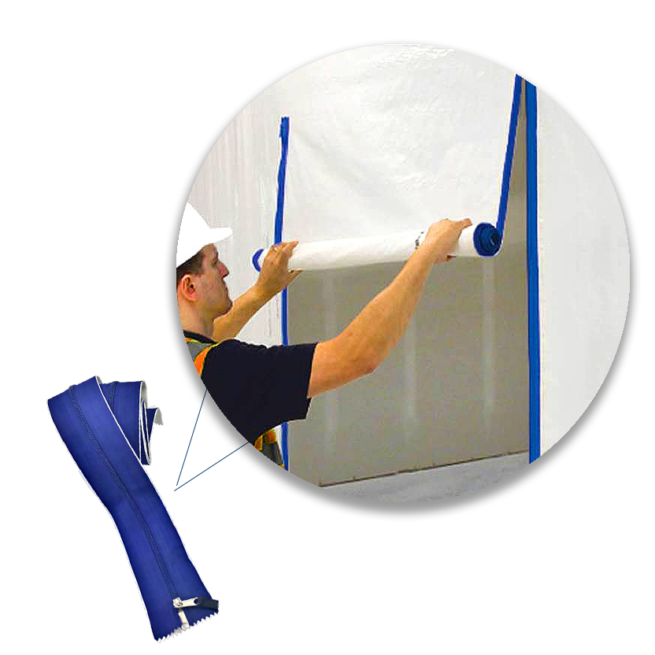 |
3″ x 7′, dual-sided access | View product → |
Frequently Asked Questions
What’s the best material to protect floors during construction?
It depends on the surface and the traffic it’ll see. Self-adhesive films suit carpet, tile, and hardwood on shorter jobs. Heavier film like BearAcade holds up better on demolition-heavy sites with carts and equipment.
How long can self-adhesive floor protection stay down before it damages the floor?
Americover rates its self-adhesive films for 30 to 45 days, depending on the product. Each uses a water-based or non-transferring adhesive that releases cleanly. Leaving film down past its rated window raises the risk of residue or adhesive transfer.
What’s the difference between BearAcade Heavy Duty Carpet Protection Film and Carpet Cover Self-Adhesive?
BearAcade is a 6 mil film for heavy foot traffic, carts, and demolition-heavy jobs. It carries a 30-day application window and offers a fire-retardant option. Carpet Cover is a lighter 3 mil film that suits shorter, lower-traffic jobs and holds for up to 45 days.
Is fire-retardant sheeting required to seal a residential worksite?
Not usually for standard residential remodels. Many occupied commercial, healthcare, and multi-family projects require it, though. Check with your local Authority Having Jurisdiction if the project sits in or next to occupied space.
How do I stop dust from tracking through a jobsite on footwear?
Place Sticky Mats™ at every work-area entrance. Each mat’s numbered peel-away layers pull dust and debris off boots before it spreads. Peel off a loaded layer, and a fresh, tacky layer waits underneath.
Can floor protection film go on hardwood or tile, not just carpet?
Yes. Use Multi-Surface Cover on hard surfaces like tile, hardwood, laminate, and stone. Carpet Cover and BearAcade target carpet fibers specifically.
Protect the Floor. Protect the Reputation.
A clean, damage-free floor at final walkthrough says more about a crew than almost anything else on the punch list. Browse Americover’s floor and surface protection products →