
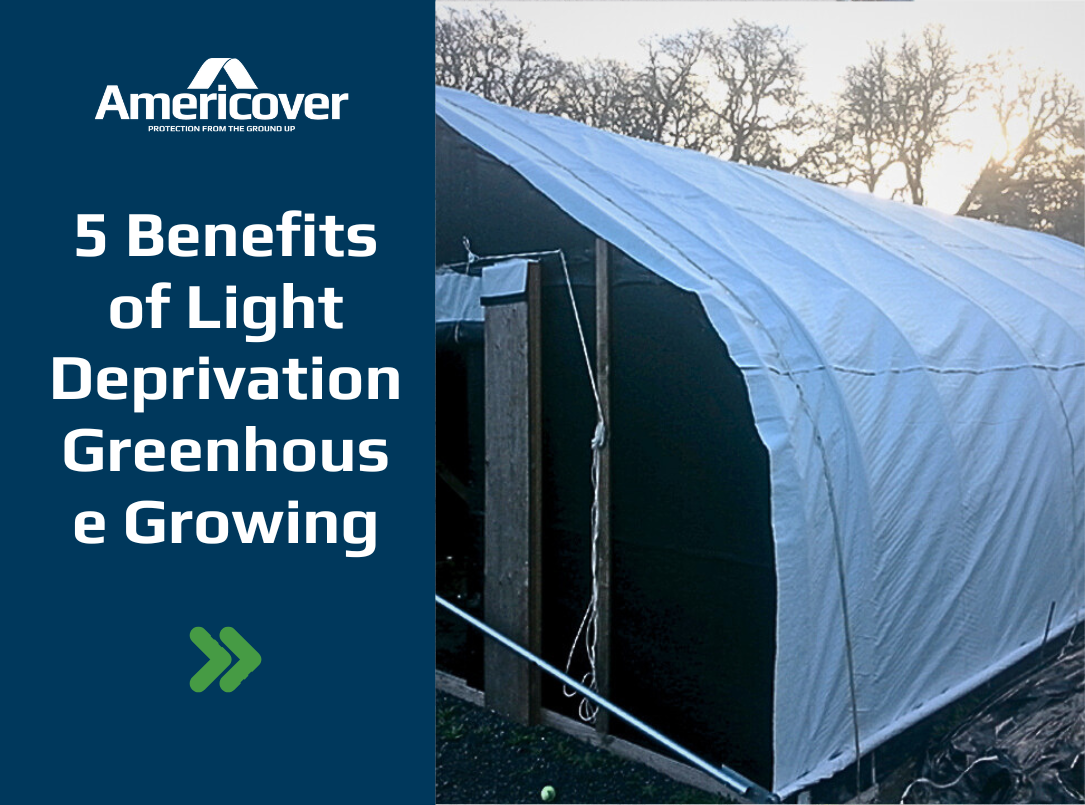
Light deprivation greenhouse growing is one of the most effective techniques for cultivating high-quality crops year-round. By managing how much light your plants receive, you can influence growth cycles, improve yields, and maintain crop quality with precision and consistency — all while lowering costs and conserving energy.
Below, we explore the key advantages of light-deprivation systems and how this growing method continues to advance modern agriculture.
1. Maximizing the Power of Natural Sunlight
Natural sunlight provides the full spectrum of wavelengths that plants use for photosynthesis and other growth processes. With light deprivation greenhouse growing, you can fine-tune sunlight exposure — blocking or filtering light as needed to mimic shorter days or different seasons.
Research from the University of Arizona Controlled Environment Agriculture Center (CEAC) shows that managing light intensity and duration is one of the most critical factors for consistent, high-quality greenhouse production.
By using natural sunlight strategically, growers reduce reliance on artificial lighting and help plants reach optimal photosynthetic efficiency while maintaining superior flavor, color, and structure.
📖 University of Arizona CEAC — Thoughts on Supplemental Lighting
2. Growing Versatility for Diverse Crops
Light deprivation techniques give growers complete control over photoperiods — the daily light-to-dark ratio that influences plant growth and flowering. This versatility allows multiple plant species to thrive in the same environment under customized conditions.
For example, leafy greens may benefit from extended daylight exposure, while flowering crops can be “tricked” into blooming early by adjusting darkness periods. Research shows that manipulation of day-length and light interruption is directly correlated to flowering, dormancy, and crop scheduling.
In other words, light deprivation greenhouses empower growers to create micro-environments tailored to each plant’s developmental stage and biological needs.
📖 Purdue Extension — Managing Photoperiods in Greenhouses
🌱 Did you know? Different crops require different photoperiods to flower and produce optimally. A single light deprivation greenhouse can support multiple crop types simultaneously — each dialed in to its own ideal light-to-dark schedule.
3. Increased Harvest Frequency and Yield Control
By controlling when plants transition between vegetative and flowering stages, growers can schedule harvests year-round — often achieving multiple crop cycles in the same space.
A peer-reviewed study published in the National Center for Biotechnology Information (NCBI) database shows how manipulating photoperiods and daily light integrals (DLI) in greenhouse settings allows for controlled morphological development and year-round production of crops.
This makes light deprivation greenhouse growing a strategic method for maximizing production without expanding physical acreage.
📖 NCBI — Photoperiod and Daily Light Integral Effects on Greenhouse Crops
4. Year-Round Growing, Independent of Weather
Traditional outdoor farming is bound by daylight hours, seasons, and weather fluctuations. With light deprivation systems, growers gain full control of the growing environment — extending or shortening daylight exposure as needed to maintain ideal conditions.
Even during shorter winter days, blackout coverings can simulate specific photoperiods, and supplemental lighting can sustain growth through overcast or rainy conditions. Controlled light environments are proven to improve energy efficiency and reduce climate-stress on crops.
📅 Grow on your schedule, not the season’s. Light deprivation systems let you trigger flowering and harvest windows at the times that work best for your operation — regardless of what’s happening outside.
5. Sustainable and Eco-Friendly Growing
Light deprivation greenhouses prioritize resource efficiency by utilizing natural sunlight rather than relying solely on artificial light. This reduces energy consumption, minimizes carbon footprint, and helps maintain a lower environmental impact compared to fully indoor operations.
Optimizing solar input through passive design and strategic shading is one of the most sustainable ways to regulate greenhouse energy use. With the right combination of blackout materials, ventilation, and reflective sheeting, growers can achieve consistent crop quality while promoting sustainability.
📖 CEAC — Supplemental Light for Greenhouse Crops
Why Growers Choose Americover
Whether you’re managing a commercial greenhouse or a small-scale operation, Americover delivers high-performance blackout sheeting designed for professional light deprivation environments.
Our BOLD® Black-Out Light Deprivation Tarps offer:
| ✓ | 100% light blocking for precise photoperiod control |
| ✓ | Multi-seasonal UV resistance for extended outdoor durability |
| ✓ | Reinforced scrim construction for tear and puncture resistance |
| ✓ | Clean, uniform seams for consistent coverage and performance |
🌿 Trusted by growers, builders, and distributors nationwide, Americover is your source for engineered plastic sheeting solutions that help you grow smarter — not harder.
Call us at 833-261-6501 or visit americover.com to learn more about our light deprivation greenhouse products and custom fabrication options.