
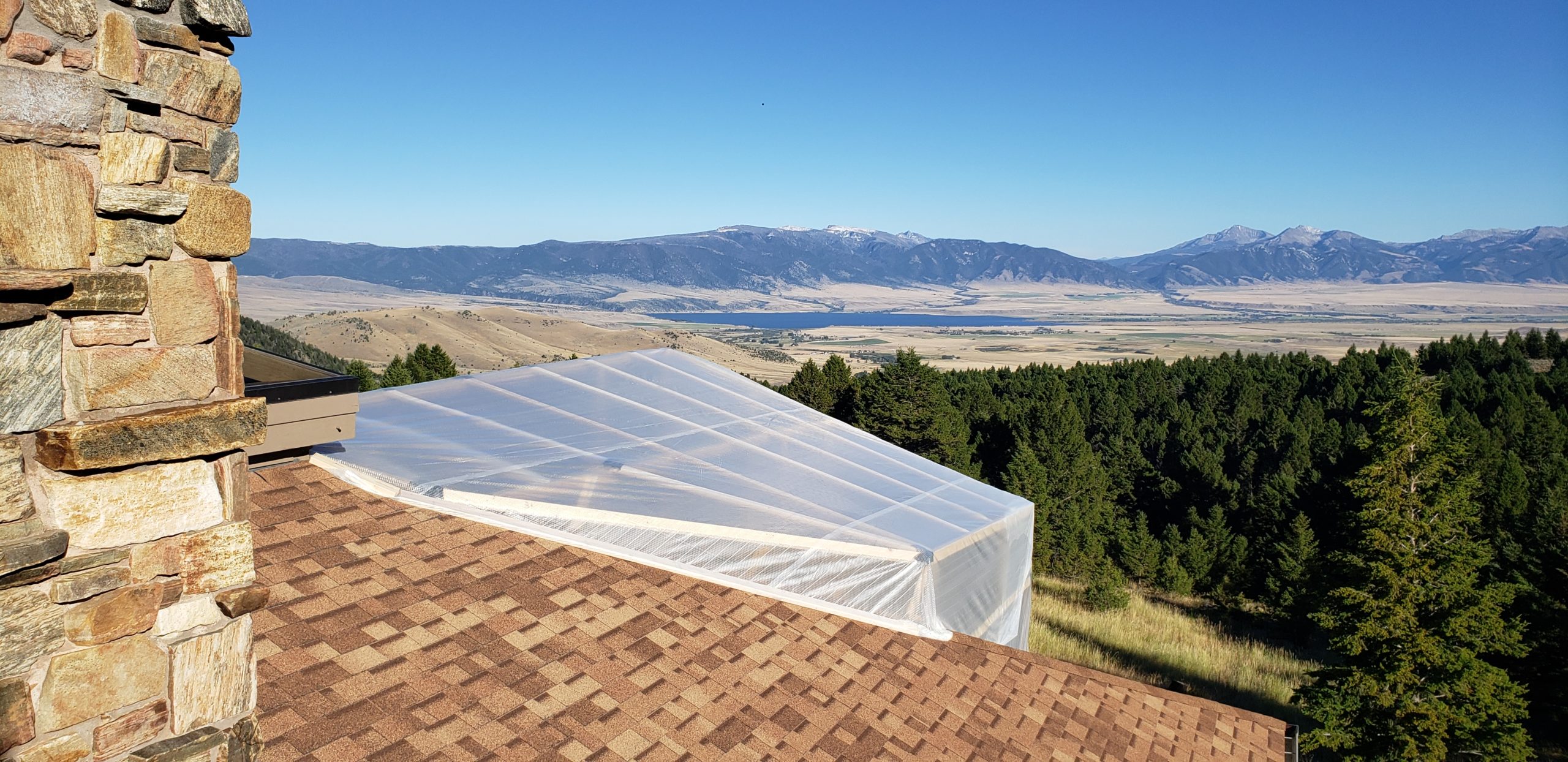
Weather Protective Enclosures: A Year-Round Guide for Construction
Construction schedules don’t stop for weather. Deadlines don’t move for snow, monsoon rain, or triple-digit summer heat — and neither can your materials and crew. A weather protective enclosure made from polyethylene sheeting gives your site a controlled environment, protects partially completed structures from damage, and keeps your project on schedule regardless of season.
Most contractors reach for enclosures in winter. That instinct is right — but it covers only half the calendar. Summer UV exposure, heat, afternoon thunderstorms, and blowing dust create the same types of delays and material damage as winter conditions. The same category of material solves both problems when you match the spec to what you’re actually facing.
Reinforced, fire retardant, and UV-rated poly sheeting for temporary enclosures — USA-manufactured, in stock, and available in custom sizes. View construction sheeting →
What Is a Weather Protective Enclosure?
A weather protective enclosure is a temporary barrier — typically polyethylene sheeting stretched over scaffolding, framing, or a structural support system — installed around or over an active construction site.
It is not a permanent structure. It is a controlled layer between your project and the elements. Enclosures can wrap a full building frame, isolate an exposed section of structure, enclose a scaffold system, or form a heated or shaded work zone depending on the season and need.
The goal is the same in every application: keep the uncontrolled environment outside while your crew keeps working inside.
How It Works
The enclosure blocks or filters what reaches your project: wind, rain, snow, debris, UV radiation, heat, and airborne contaminants.
The poly sheeting you choose determines the level of protection you actually get. Thicker mil ratings resist puncture and tear under load. Reinforced scrim layers add tensile strength against ripping. UV inhibitors extend the usable life of the film outdoors. Fire retardant additives ensure code compliance on occupied or active job sites.
Matching the right material to the right conditions — season, climate, project length, and compliance requirements — is where spec decisions succeed or fail.
Standards and Compliance
Fire Retardant Requirements
Many jurisdictions require temporary construction enclosures to meet NFPA 701 or ASTM E84 testing standards before installation on occupied or active sites. Always verify requirements with your local Authority Having Jurisdiction (AHJ) before selecting and installing any temporary enclosure material.
UV Ratings and Project Length
UV stabilization in poly sheeting is rated by duration: 3–6 months, 1 year, or up to 4 years. Using a 6-month UV film on a 12-month project means replacing material mid-job — which costs time and labor. Match the UV rating to the full project timeline from the start.
Practical Applications by Season
Winter Applications
- Insulation and Heated Work Zones: Enclosing a building frame retains heat and keeps interior temperatures workable, allowing concrete, adhesives, and sealants to cure within spec range.
- Snow Load Protection: Heavy snow accumulation on thin poly causes collapse and puncture. Use reinforced, heavier mil options in high-snowfall zones — standard unreinforced film is not built for this.
- Rain and Moisture Control: Poly enclosures block driven rain from penetrating open structures. Pair with a leak diverter drain tarp to route runoff away from sensitive areas.
- Wind and Debris: Winter wind carries debris that damages materials, wiring, and surfaces. String-reinforced sheeting resists ripping under sustained wind pressure.
- Frost Protection: Water that enters a structure and freezes expands — cracking joints, spalling concrete, and compromising structural integrity. An enclosure prevents that exposure entirely.
Summer Applications
- UV Degradation Control: Prolonged UV exposure degrades adhesives, membranes, untreated lumber, and certain insulation products. UV-stabilized or opaque enclosure film limits that exposure over long build durations.
- Heat Management: In desert climates or during extended heat events, extreme temperatures create unsafe conditions for crew and affect material performance. White or light-colored poly enclosures reflect radiant heat and lower interior temperatures meaningfully.
- Monsoon and Summer Rain: Afternoon thunderstorms and monsoon events drive moisture into open structures the same way winter rain does. Enclosures provide the same protection regardless of what’s generating the moisture.
- Dust and Particulate Control: In arid or high-traffic zones, blowing dust and fine particulate contaminates surfaces, damages equipment, and compromises finishes. An enclosure creates a contained, controlled work environment.
- Concrete Curing in Heat: Freshly poured concrete in high-heat conditions loses moisture too quickly, disrupting hydration and reducing finished strength. An enclosure that controls airflow and temperature supports proper curing where open-air conditions would work against it.
Recommended Products by Application
| Product | Mil | UV Life | Best For |
|---|---|---|---|
| SolaScrim™ 4-Year Clear Reinforced | 10 mil | 4 years | Long-duration heavy-duty enclosures, year-round |
| 10 Mil Clear Dura-Skrim® Reinforced | 10 mil | — | Heavy-duty protection, high wind and debris zones |
| Heat Shrink Wrap | 6–12 mil | Up to 1 year | Medium-duty seasonal enclosures |
| 6 Mil Clear Dura-Skrim® Reinforced | 6 mil | Up to 6 months | Short-term or single-season enclosures |
| Tuff Scrim FR Reinforced | 6–8 mil | — | FR-required sites, reinforced construction |
| 8 Mil Black Fire Retardant Sheeting | 8 mil | — | FR-required, light-blocking applications |
| 6 Mil / 10 Mil FR Dura-Skrim® Reinforced | 6 & 10 mil | — | FR-required, reinforced, year-round use |
Frequently Asked Questions
Do I need fire retardant sheeting for a temporary construction enclosure?
It depends on your jurisdiction and site conditions. Many local building codes require NFPA 701- or ASTM E84-compliant sheeting for temporary enclosures on occupied or active construction sites. Verify requirements with your local AHJ before selecting material.
What mil thickness is right for a weather protective enclosure?
For short-term or light-duty applications, 6 mil reinforced sheeting is typically sufficient. For heavy snow load zones, sustained wind exposure, or projects extending beyond one season, 10 mil reinforced sheeting or a 4-year UV-rated film is the better call. Mil thickness alone doesn’t tell the full story — reinforced scrim layers add the rip and puncture resistance that standard poly lacks.
Can I use the same sheeting for both summer and winter enclosures?
Yes — if the UV rating and structural performance cover both seasons. A 4-year reinforced film handles year-round exposure. Shorter-rated films may degrade before winter arrives if first installed for a summer project. Plan for the full project timeline, not just the current season.
How long does poly sheeting last as a construction enclosure?
UV degradation is the primary failure point outdoors. Sheeting with a 3–6 month UV rating will become brittle and break down in that timeframe under direct sun exposure. Films rated for 1 year or 4 years hold up proportionally longer. Wind, debris, and handling reduce those timelines — reinforced options resist those forces significantly better than unreinforced poly.
What’s the difference between reinforced and standard poly sheeting for enclosures?
Standard poly is a single extruded film. Reinforced poly adds an internal scrim — a grid of woven or string-reinforced fibers — that gives the sheeting dramatically higher tensile strength and tear resistance. For enclosures exposed to wind, debris, snow load, or active jobsite conditions, reinforced is the correct category. Standard poly is better suited for underlayment, light containment, and low-stress applications.
Get the Right Sheeting for Your Enclosure
Americover carries reinforced, fire retardant, and UV-rated poly sheeting for every season, climate, and job site condition — all USA-manufactured and available in custom sizes. Not sure what you need? Your dedicated account manager will match you to the right product for your project.