

Radon mitigation is never a one-size-fits-all project. Older homes and unfinished basements often present hidden challenges. In these cases, material performance matters just as much as the installation itself.
This case study shows how one homeowner reduced extreme radon levels using a 20 mil radon vapor barrier. It also highlights why standard plastic sheeting often fails in long-term applications.
For a deeper breakdown of radon barriers and ASTM requirements, visit:
Radon Mitigation Vapor Barrier Guide →
Long-term performance depends on durability, sealing, and proper installation.
Project Overview
After living in the same home for over 30 years, a Pennsylvania homeowner discovered dangerously high radon levels. The basement tested above 115 pCi/L, while upper floors measured between 50–60 pCi/L.
For context, the EPA recommends action at 4 pCi/L or higher. European standards are even stricter at 2.7 pCi/L.
Because radon is the leading cause of lung cancer in non-smokers, the homeowner needed a reliable and permanent solution.
The Challenge
This project required more than a typical radon mitigation system.
- A 15′ × 14′ section of the basement had a wood subfloor instead of concrete
- An 18″ void beneath the floor required gravel fill
- Structural damage included rotting beams and outdated framing
- Two walls required full reconstruction with cinder block
These issues delayed the project for months. However, they also created an opportunity to rebuild the system correctly from the ground up.
The mitigation plan included:
- Installing radon collection pipes below the slab
- Adding a gravel layer for airflow
- Installing a high-performance vapor barrier
- Connecting a riser pipe for active ventilation
The homeowner chose to complete part of the installation themselves and bring in professionals for the final system.
The Material Problem with Standard Plastic
During the delay, the homeowner used standard 6 mil plastic from a big-box store to cover the gravel temporarily.
The results were immediate:
- The material developed punctures from normal foot traffic
- It required constant replacement
- It failed to maintain a sealed barrier
This experience highlights a major issue in radon mitigation: not all plastic sheeting performs the same.
The Americover Solution
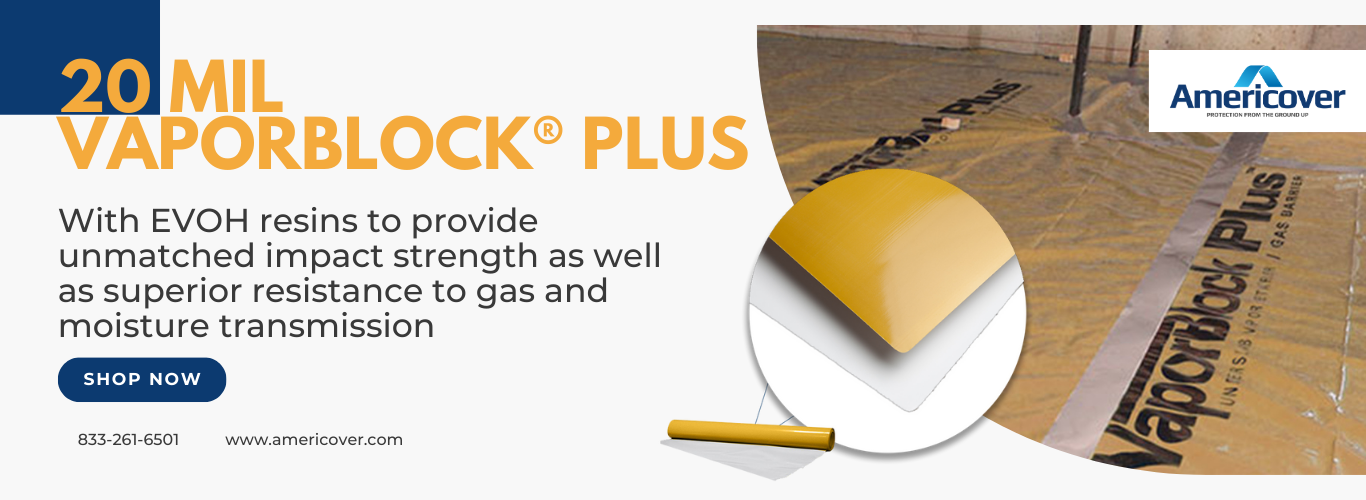
After researching better options, the homeowner selected Americover’s 20 mil radon vapor barrier. This product is engineered specifically for sub-slab applications.
With guidance from the Americover team, they also sourced:
- Seaming tape for airtight joints
- Double-sided butyl tape for perimeter sealing
- Installation resources and ongoing support
Installation Experience
Once structural repairs were complete, the installation moved forward quickly:
- Radon pipes and gravel layer installed
- 20 mil vapor barrier sealed in place
- Concrete slab poured over the system
The difference between materials was clear during installation.
“When we laid the 20 mil Americover vapor barrier, there were no punctures—even after walking across it. That was a big difference compared to the 6 mil plastic.”
Results
After completing the system, radon levels dropped dramatically.
- All floors measured approximately 0.5 pCi/L
- Performance remained consistent during winter conditions
“Radon levels on all three floors are now about 0.5… What a relief!”
The homeowner now considers the home effectively radon-free.
Material selection played a critical role in achieving long-term results.
Why Material Selection Matters
This project highlights a key takeaway: radon mitigation systems rely on more than pipes and fans. The vapor barrier must remain intact and sealed for years.
If you’re comparing options for different applications, review our
under slab vapor barrier guide
to see how thicker materials improve long-term performance.
For crawl space applications, installation methods and durability requirements vary. Learn more in our
crawl space vapor barrier solutions.
If you’re deciding between thicknesses, this breakdown of
6 mil vs 20 mil vapor barrier
explains why thicker materials perform better in demanding environments like radon mitigation.
Frequently Asked Questions About Radon Vapor Barriers
What thickness vapor barrier is best for radon mitigation?
Most systems require at least 10 mil. For durability and long-term performance, many professionals use 15–20 mil barriers.
Why is 6 mil plastic not recommended?
6 mil plastic punctures easily and cannot maintain an airtight seal, which reduces system performance.
What makes a vapor barrier effective?
It must resist punctures, seal tightly, and remain durable under a slab for years.
Can I install a radon barrier myself?
Some homeowners do, but complex projects benefit from professional installation.
How much can radon levels be reduced?
Proper systems often reduce levels below 2 pCi/L and sometimes as low as 0.5 pCi/L.
Need Help with a Radon Mitigation Project?
Choosing the right material can make or break your system. Americover offers engineered vapor barriers and support to help you get it right the first time.