
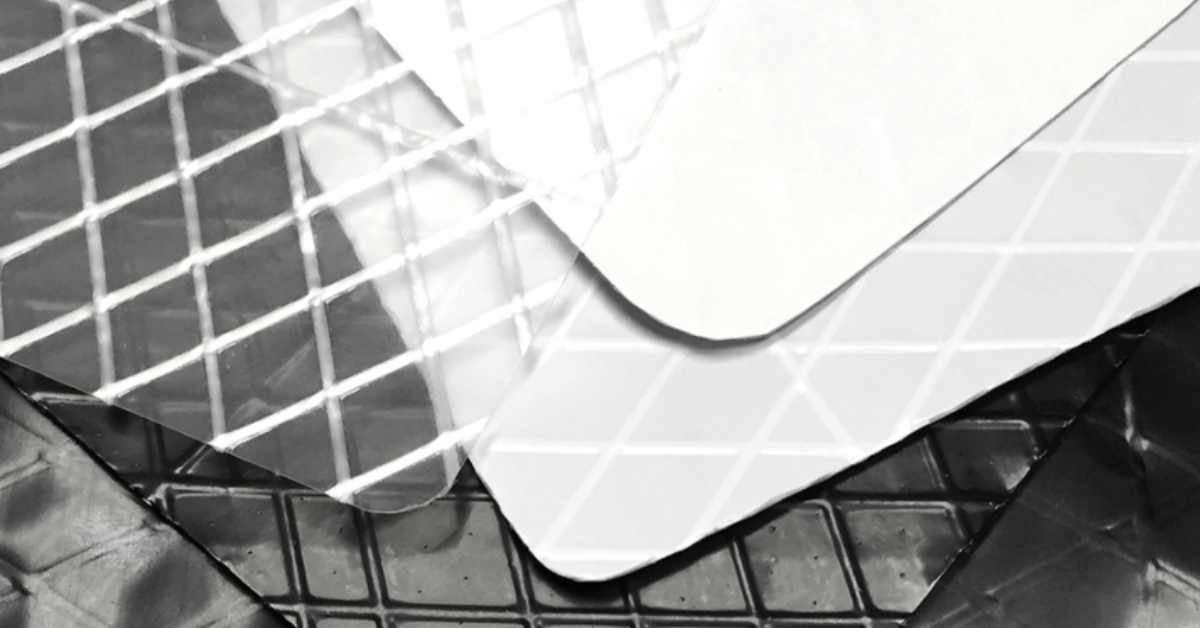
Americover labels much of its reinforced plastic sheeting “heavy duty plastic sheeting” right on the product. Either name points to the same material. It’s the middle ground between throwaway poly and industrial liner. Crews reach for it on jobs where standard 6 mil sheeting tears.
Reinforced plastic sheeting ranks among the most versatile products Americover carries — and one of the most misunderstood by name alone. Product tags often call it “heavy duty plastic sheeting.” Spec sheets test it to ASTM E96. On the jobsite, crews just call it the roll that didn’t tear when the standard poly did. All three descriptions point to the same material.
What Is Reinforced (Heavy Duty) Plastic Sheeting?
Manufacturers build reinforced plastic sheeting from layers of virgin high-strength polyethylene. A scrim — a grid of reinforcing cord or string — runs between the film layers. That scrim separates heavy duty plastic sheeting from ordinary construction poly. Standard 6 mil visqueen has nothing to stop a tear once it starts; reinforced sheeting does.
Americover’s reinforced lines span a 6 mil to 20 mil thickness range. Options include clear, white, black, and white/black dual-sided films, plus fire-retardant variants for code-restricted environments.
How It Works
The scrim grid typically spans about 3/8 inch apart, running diagonally or as a cord pattern. It locks the polyethylene layers together. When a nail head, dropped tool, or sharp edge punctures the film, the scrim stops the tear right there. As a result, a small hole stays a small hole instead of running the length of the roll.
Standards and Specifications
Americover tests its reinforced plastic sheeting to ASTM E96 for water vapor transmission. That’s how the material earns its vapor retarder rating. Perm ratings vary by thickness and construction. For example, 10 mil Dura-Skrim® tests at 0.031 perms (ASTM E96, Procedure B). Some projects specify full ASTM E1745 vapor retarder classification (Class A, B, or C) instead. In that case, confirm the current technical data sheet against that specific standard. E96 perm testing and E1745 classification are related, but they’re separate requirements.
Some reinforced products carry additional certifications. 20 mil Dura-Skrim® White meets FDA 21 CFR 177.1520(c). Manufacturers also test fire-retardant reinforced variants to NFPA 701 and ASTM E84. UV-stabilized formulations extend outdoor service life anywhere from 12 months to 5 years, depending on thickness and what UV additives it’s made with. Before specifying a product for a multi-season outdoor job, always confirm its rated exposure window.
Practical Applications
Construction: Reinforced sheeting shows up as dust barriers, temporary enclosures, vapor and moisture barriers, secondary containment, erosion control, and asbestos abatement containment. For a deeper dive into construction-specific mil selection, see How Reinforced Plastic Sheeting Is Used in Construction.
Healthcare: Hospitals, care centers, and clinical renovation projects use reinforced sheeting to build temporary walls and dust containment barriers. These barriers separate occupied areas from active construction. This separation matters for infection control, especially during remodels that can’t shut down patient care. See our dust containment products for barrier-specific options.
Agriculture: Growers use reinforced sheeting as greenhouse covers, light deprivation tarps, and aquaponics/hydroponics liners. The scrim reinforcement matters here too. Wind load on a greenhouse cover is a repeated stress test, not a one-time puncture risk.
| Product | Image | Key Spec | Link |
|---|---|---|---|
| 10 Mil Clear Dura-Skrim® | 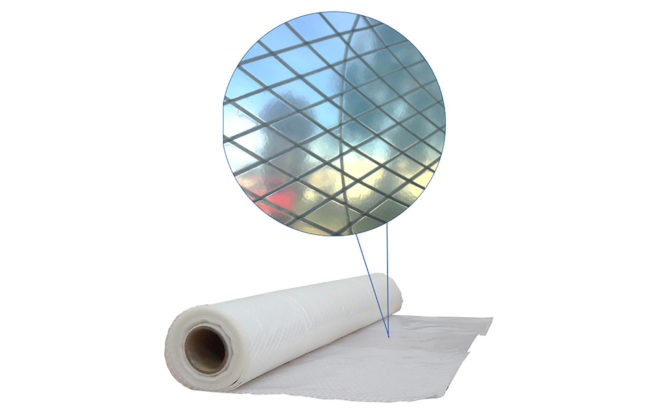 |
0.031 perms (ASTM E96); up to 1 year outdoor life | View product → |
| 20 Mil White Dura-Skrim® | 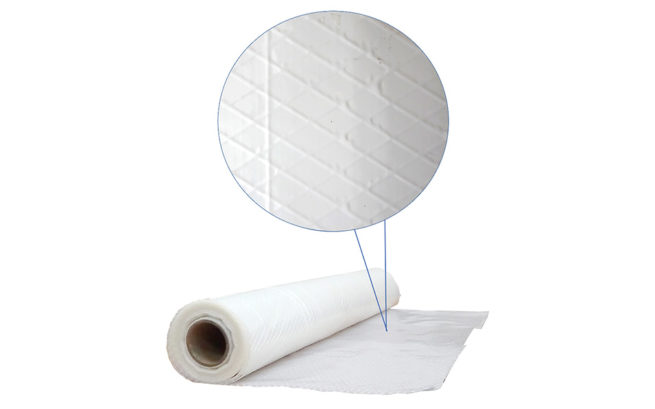 |
FDA 21 CFR 177.1520(c) compliant; up to 5 years outdoor life | View product → |
| 6 Mil Tuff-Scrim™ Clear | 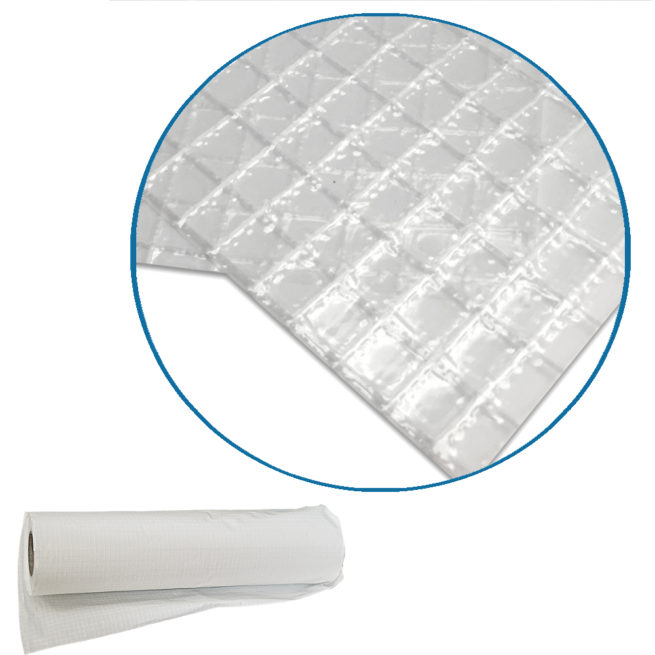 |
ASTM E96 tested; UV-stabilized 24 months; cold-crack resistant | View product → |
Frequently Asked Questions
What is reinforced (heavy duty) plastic sheeting made of?
Layers of virgin high-strength polyethylene surround a scrim grid of reinforcing cord or string. The scrim is what stops tears from spreading, which is the main difference from standard construction poly.
What thickness of heavy duty plastic sheeting do I need?
It depends on traffic and exposure. Lighter 6 mil reinforced options handle short-term jobs and greenhouse covers. Choose 20 mil options for crawl space encapsulation, high-traffic containment, and multi-year outdoor exposure. Match the mil thickness to job duration and abuse, not just square footage.
Is heavy duty plastic sheeting the same as a vapor barrier?
Manufacturers test reinforced sheeting to ASTM E96, and it functions as a vapor retarder. However, “vapor barrier” and full ASTM E1745 classification (Class A, B, or C) are separate specifications. Confirm which standard your project requires before specifying a product.
Can heavy duty plastic sheeting be used in healthcare settings?
Crews commonly use it to build temporary partitions and dust containment barriers during hospital and clinical renovations. Codes and infection-control standards often require separating active construction from occupied patient areas.
Does heavy duty plastic sheeting work for greenhouse and agricultural covers?
Clear reinforced sheeting is a standard choice for greenhouse covers, light deprivation tarps, and aquaponics/hydroponics liners. The scrim reinforcement holds up against wind load and repeated handling in these settings.
Find the Right Reinforced Plastic Sheeting for Your Project
Americover manufactures reinforced (heavy duty) plastic sheeting in the USA. More than 30 years of manufacturing experience back every roll. Whether you’re containing dust, encapsulating a crawl space, or covering a greenhouse, there’s a roll built for the job. Call 760-388-6294 or browse the full reinforced plastic sheeting lineup →