
Ground moisture doesn’t stop moving just because a floor sits above it. In an unvented crawl space, water vapor rises continuously from bare soil into the framing, insulation, and eventually the air a family breathes upstairs. Crawl space encapsulation plastic is the material that interrupts that path — but not all plastic sheeting does the job the same way, and the specification behind the roll matters more than the roll itself.
What Is Crawl Space Encapsulation Plastic?
Crawl space encapsulation plastic is a low-permeance polyethylene or polyolefin sheeting installed across the ground and up the foundation walls of a crawl space to block water vapor before it enters the building. Warm, moist air condenses wherever it meets a cooler surface — the same principle that fogs a cold glass of water. Left unchecked, that condensation collects in floor joists, subfloor sheathing, and insulation, feeding mold, wood rot, and pest activity.
The plastic is the physical layer that gives water vapor nowhere to go. Rather than reaching structural wood, moisture condenses on the sheeting’s surface, where it stays contained instead of soaking into the building. Properly installed encapsulation also helps block soil gases — radon and methane among them — from migrating into occupied space above.
How Crawl Space Encapsulation Works
A complete encapsulation system is more than a sheet of plastic laid on dirt. The liner has to cover the entire ground area, run up the foundation stem wall at least six inches, and seal at every seam and penetration. Overlapping panels get joined with vapor barrier tape rated for the sheeting’s thickness, while 2-sided butyl tape handles the transition where the liner meets masonry, piers, or foundation walls. Ratchet fasteners hold the barrier tight against vertical surfaces so it doesn’t sag and pull loose over time.
Skipping any one of these steps creates a gap, and moisture finds gaps fast. An unsealed seam or a liner that stops short of the wall performs the same as no liner at all in that spot.
The Standard That Actually Governs the Spec
ASTM E1745, Standard Specification for Plastic Water Vapor Retarders Used in Contact with Soil or Granular Fill Under Concrete Slabs, is the specification most crawl space liners are measured against, even though it was written for under-slab use. It tests water vapor permeance, tensile strength, and puncture resistance, then classifies the material into Class A, B, or C.
Code doesn’t set a mil-thickness minimum for crawl space ground cover specifically. IRC Section R408.3 requires only a continuous Class I vapor retarder, sealed at 6-inch overlaps and extended 6 inches up the stem wall, for an unvented crawl space to skip mechanical ventilation openings. Ten mil has become the practical floor on jobsites because it’s the thinnest gauge that reliably survives installation over gravel and debris.
For crawl spaces with a documented mold or moisture history, ASTM G21 fungal resistance testing adds a second layer of documentation, confirming the film surface itself resists colonization by common mold species.
Choosing the Right Plastic for the Job
Not every crawl space needs the same barrier. Match the liner to the moisture load, the gas risk, and the traffic the space will see.
| Product | Image | Key Spec | Link |
|---|---|---|---|
| Pro Crawl Barrier | 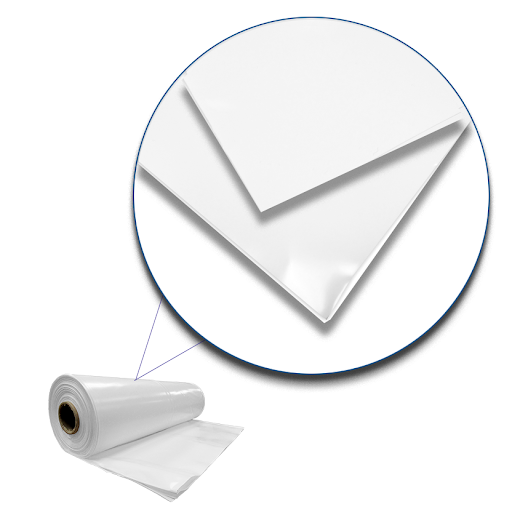 |
10 mil, 0.0228 perms, ASTM E1745 Class A/B/C | View product → |
| Pro Crawl Anti-Mold Vapor Barrier w/ MPT™ | 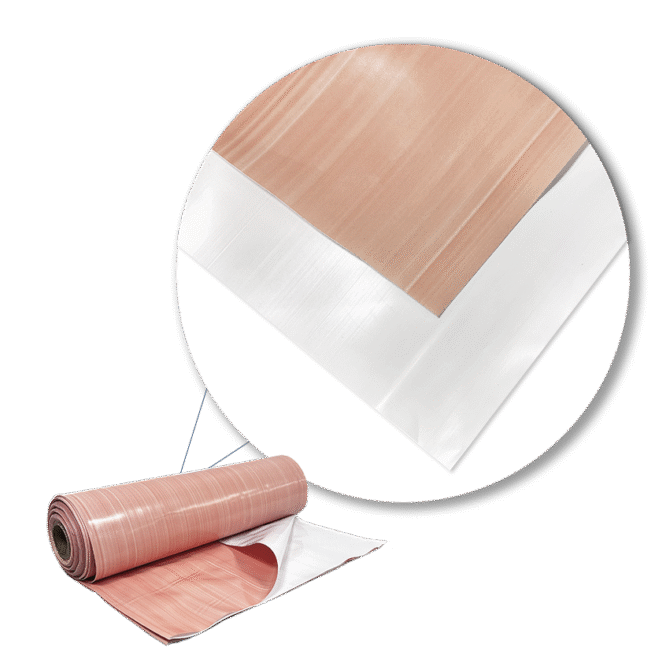 |
10 mil, 0.0228 perms, ASTM E1745 + ASTM G21 fungal resistance | View product → |
| VaporBlock® Plus 20 |  |
20 mil, 0.0098 perms, radon/methane/VOC barrier | View product → |
Pro Crawl Barrier covers standard encapsulation where moisture control and puncture resistance are the priority. Pro Crawl Anti-Mold adds embedded antimicrobial protection for post-remediation jobs or chronically humid crawl spaces. VaporBlock® Plus 20 steps up to a seven-layer polyethylene/EVOH construction built specifically to resist radon and methane migration, not just moisture — the right call in known gas-risk zones or when a soil gas mitigation system is part of the spec.
Practical Applications by Climate and Project
Climate zone changes the calculation. Cold and very cold zones deal with less soil moisture but more condensation risk at rim joists, so continuous coverage and a sealed perimeter matter most. Warm-humid and warm-mixed zones push more vapor through the soil year-round, which is where lower-permeance, heavier-mil options earn their keep.
Radon and methane mitigation projects call for a barrier tested specifically against gas transmission, not just moisture — VaporBlock® Plus 20 is built for that role. Post-remediation crawl spaces, or any space with a documented mold history, are the clearest case for the anti-mold variant. For everything else — new construction, standard residential encapsulation, manufactured home underbelly replacement — Pro Crawl Barrier’s Class A performance covers the job. For lifespan expectations once the liner is in, see our guide on how long crawl space vapor barriers last.
Frequently Asked Questions
What mil thickness should I use for crawl space encapsulation?
10 mil is the practical minimum for most crawl space encapsulation projects — thin enough to handle and thick enough to survive installation over gravel and debris. Crawl spaces with heavy foot traffic, storage, or mechanical equipment often move up to 12 or 20 mil for added puncture resistance.
Is crawl space encapsulation plastic required by code?
Yes, in most jurisdictions. IRC Section R408.3 requires a continuous Class I vapor retarder over exposed earth in an unvented crawl space, with seams overlapped and sealed and the liner extended at least 6 inches up the foundation wall. Local amendments can add stricter requirements, so always confirm with your AHJ.
Does crawl space encapsulation plastic block radon?
Standard polyethylene vapor barriers reduce but don’t fully stop radon and methane migration. Barriers like VaporBlock® Plus 20, built with EVOH resin layers tested specifically for gas permeance, are designed for radon and methane mitigation systems where a standard moisture barrier isn’t sufficient.
What’s the difference between a vapor barrier and a vapor retarder?
The terms are used interchangeably in construction, though technically a true vapor barrier has a permeance of 0.00 perms. Most products marketed as crawl space vapor barriers, including those tested to ASTM E1745, are more accurately vapor retarders — they significantly slow vapor transmission rather than eliminate it entirely.
Can I install crawl space encapsulation plastic myself?
DIY installation is possible for straightforward crawl spaces, but tight clearances, sealed seams, and code-compliant overlap and wall attachment leave little room for error. For radon or methane mitigation systems, or any project requiring documentation for inspection, working with an experienced installer or Americover’s team is worth the cost.
Get the Right Crawl Space Vapor Barrier for Your Project
Americover has manufactured crawl space encapsulation plastic in the U.S. since 1993. Our team can help you match the mil thickness, class rating, and accessories to your project’s code requirements and site conditions. Shop crawl space vapor barriers → or call 760-388-6294 to talk with our crawl space experts.