
El Niño storm preparation for homeowners across the U.S.: which states face the biggest risk this winter, and how to protect your roof, yard, and property before the storms arrive.
El Niño isn’t one big storm. It’s a season-long weather pattern that shifts the jet stream and changes where winter storms go. This year’s event is a big one. On October 8, NOAA’s Climate Prediction Center said a strong to very strong El Niño is likely to last through January–March 2027. It also gave a 70 percent chance the event reaches historic strength this November through January. (NOAA CPC)
That doesn’t mean every state gets hammered. El Niño tends to steer storms across the southern half of the country, while much of the north gets a milder winter. The first step in El Niño storm preparation is knowing which side of that line you live on.
Which States El Niño Will Affect Most
NOAA’s seasonal outlook for November through April favors a wetter-than-normal winter across the southern and central U.S., stretching into the Southeast. (NOAA CPC) Here’s how the risk breaks down by region.
| Region | NOAA Winter Signal | Main Risks |
|---|---|---|
| California and the Southwest California, Arizona, New Mexico |
Wetter than normal. 50–60% odds on the California coast. | Roof leaks, flooding, erosion, and debris flows near wildfire burn areas |
| Texas and the Southern Plains Texas, Oklahoma |
Wetter than normal. 40–50% odds. | Heavy rain, flash flooding, and soil washouts |
| Gulf Coast and Southeast Louisiana, Mississippi, Alabama, Georgia, Florida |
Wetter than normal. 70–80% odds in south Georgia and north Florida. | Repeated rainstorms, flooding, and more severe weather in Florida |
| Northwest and Northern Rockies Washington, Oregon, Idaho, Montana |
Warmer than normal. Slightly drier in the interior. | Lower snowpack, but strong coastal storms are still possible |
| Great Lakes and Northern Tier Minnesota, Wisconsin, Michigan, and neighboring states |
Warmer than normal. Slightly drier around the Great Lakes. | A milder winter overall; normal winter prep still applies |
Florida deserves a closer look. The National Weather Service in Tampa Bay found that very strong El Niño winters brought more than double the severe weather events of other winters. The 1997–98 El Niño was an extreme severe weather season there. (NWS Tampa Bay) That means wind, not just rain, is part of the threat.
The north isn’t risk-free, either. The very strong El Niño winters of 1982–83 and 2015–16 were wetter than normal across much of the Northwest. (USGS)
What You’ll Need for El Niño Storm Preparation
Here’s what to stock. Pick sheeting by UV rating and construction, not thickness alone.
| Product | Product Image | Best For | UV Rating | Size | View Product |
|---|---|---|---|---|---|
| SolaScrim™ 4 Year 10 mil Clear | 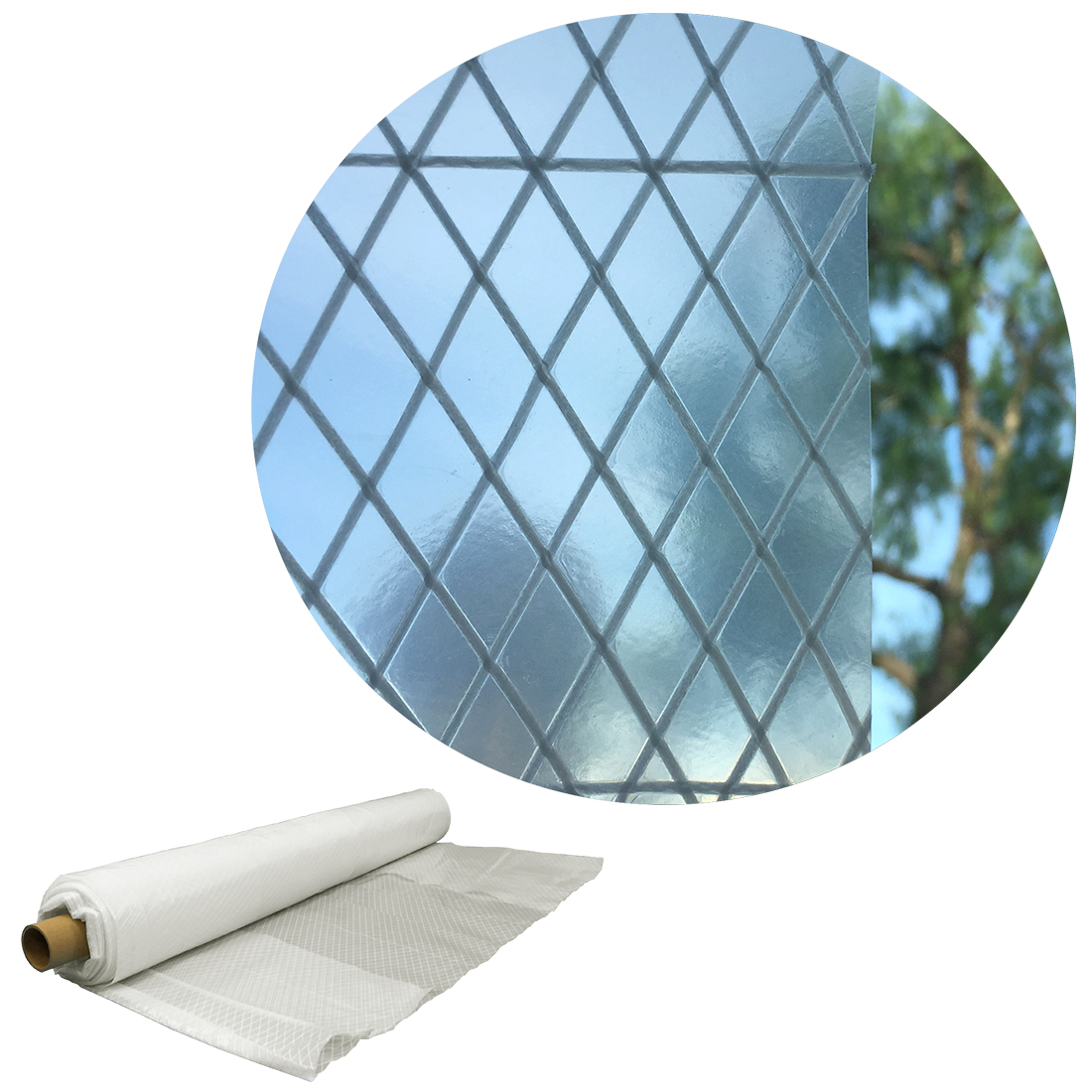 |
Whole-roof covers on larger homes, barns, and outbuildings | 4 years | 26.5’–52.75′ wide; 100′ standard, custom 50’–500′ long | View product → |
| 10 Mil Clear Dura-Skrim® (10HUV) | 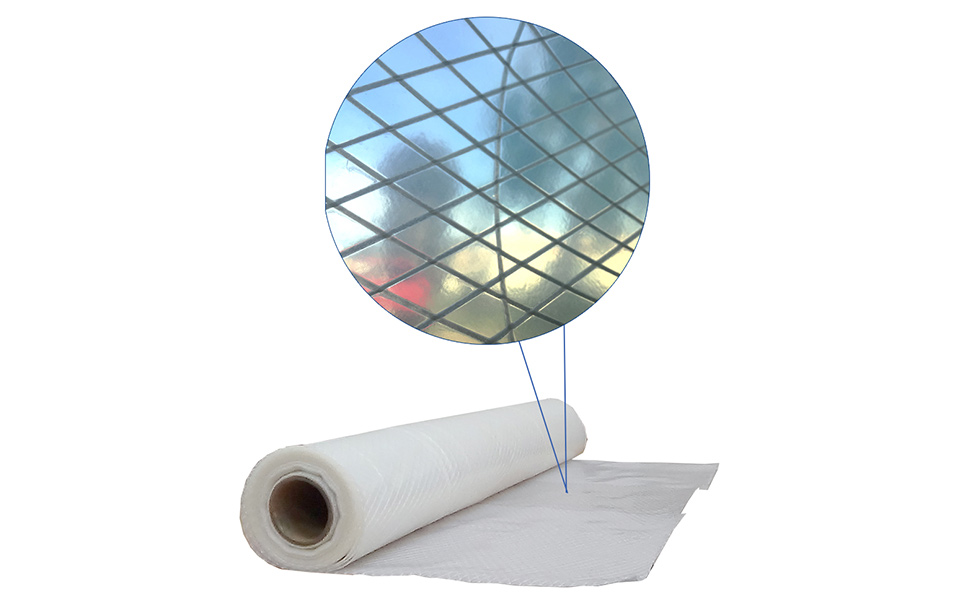 |
Emergency roof covers and damaged roof sections | Up to 1 year | 6.17′ x 100′ or 20′ x 100′ | View product → |
| Heat Shrink Wrap | 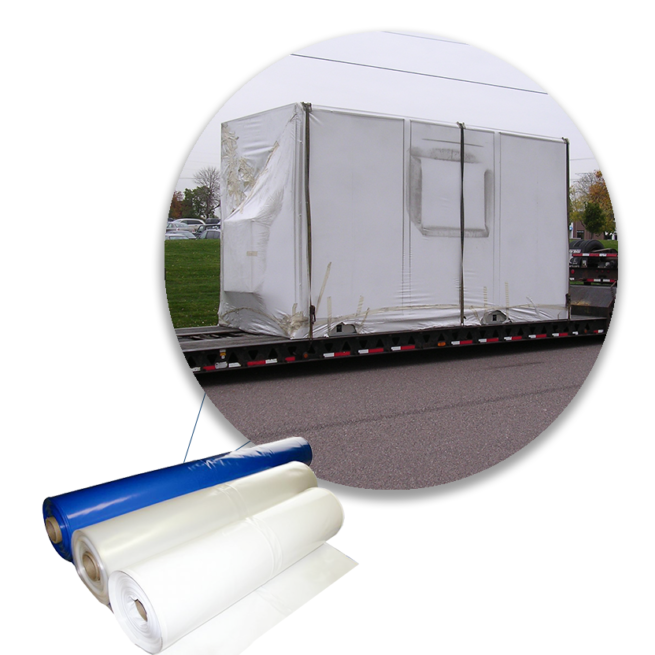 |
Wrapping boats, RVs, and equipment tight | Up to 12 months | 12’–20′ wide; 31’–425′ long | View product → |
| 6 mil Black White Dura-Skrim® | 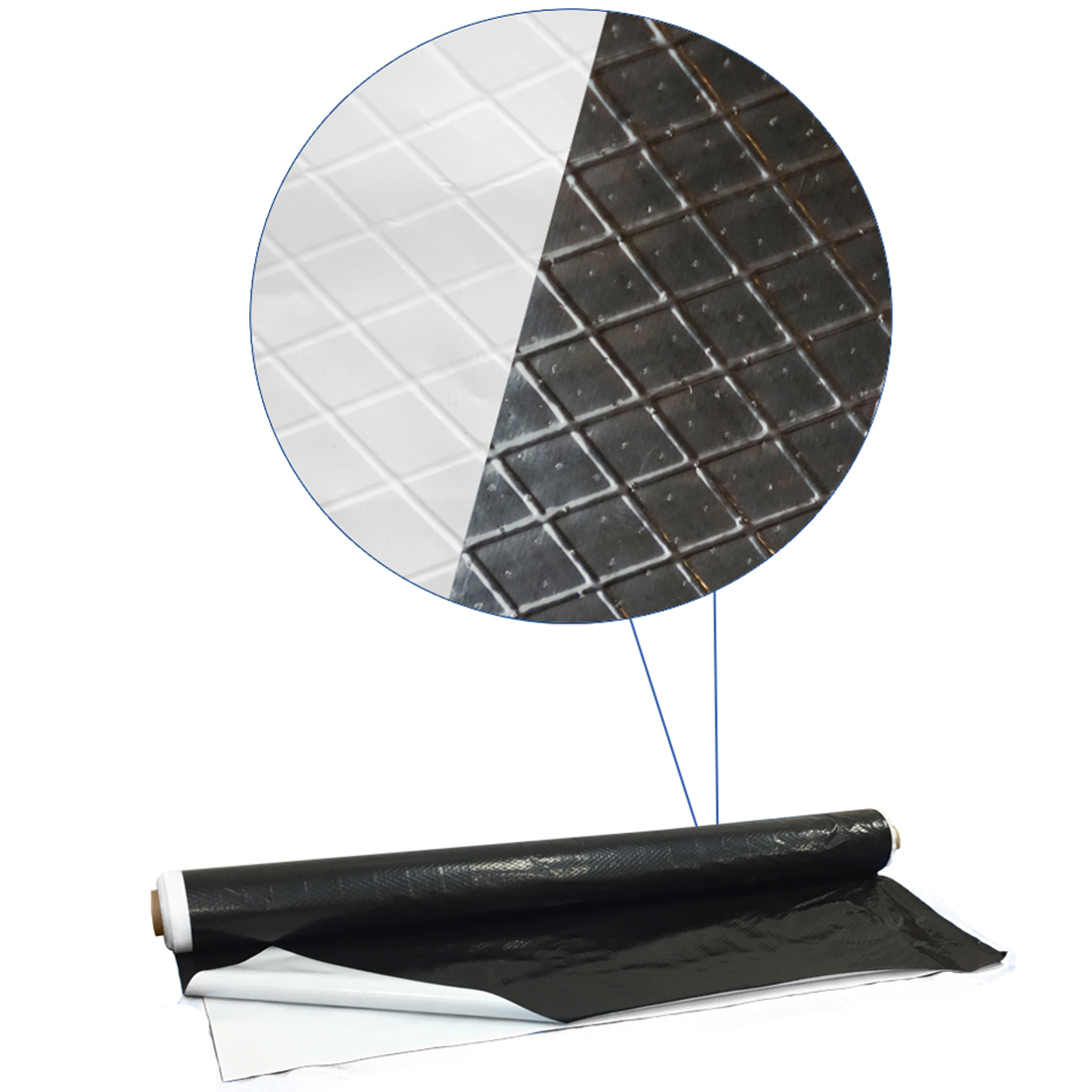 |
Roof covers, bare slopes, soil, and stockpile covers. Install white side up. | UV-stabilized (duration not listed) | 6.17′ x 100′ or 24′ x 100′ | View product → |
| 8 mil White/Black Dura-Skrim® | |
Heavier version of the 6 mil for the same jobs. Install white side up. | UV-stabilized (duration not listed) | 6.17′ x 100′, 12′ x 100′, or 24′ x 100′ | View product → |
| Leak Diverter Drain Tarp | 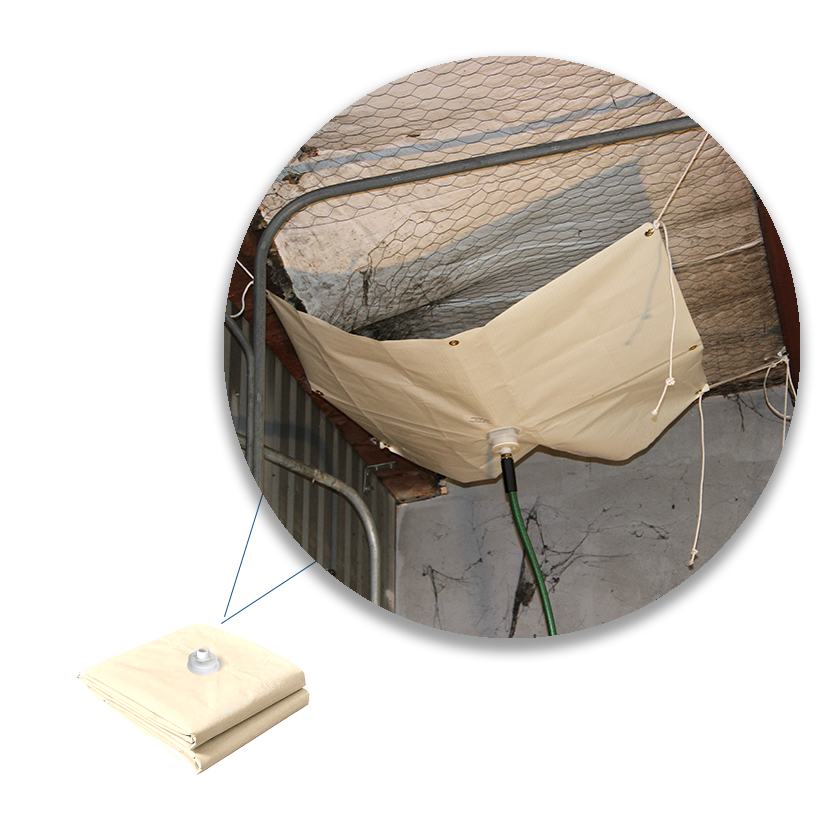 |
Draining an active ceiling leak to a bucket or sink | Not rated (indoor use) | 3′ x 3′ or 5′ x 5′ | View product → |
| Tarp Grippers™ Nylon Grommets | 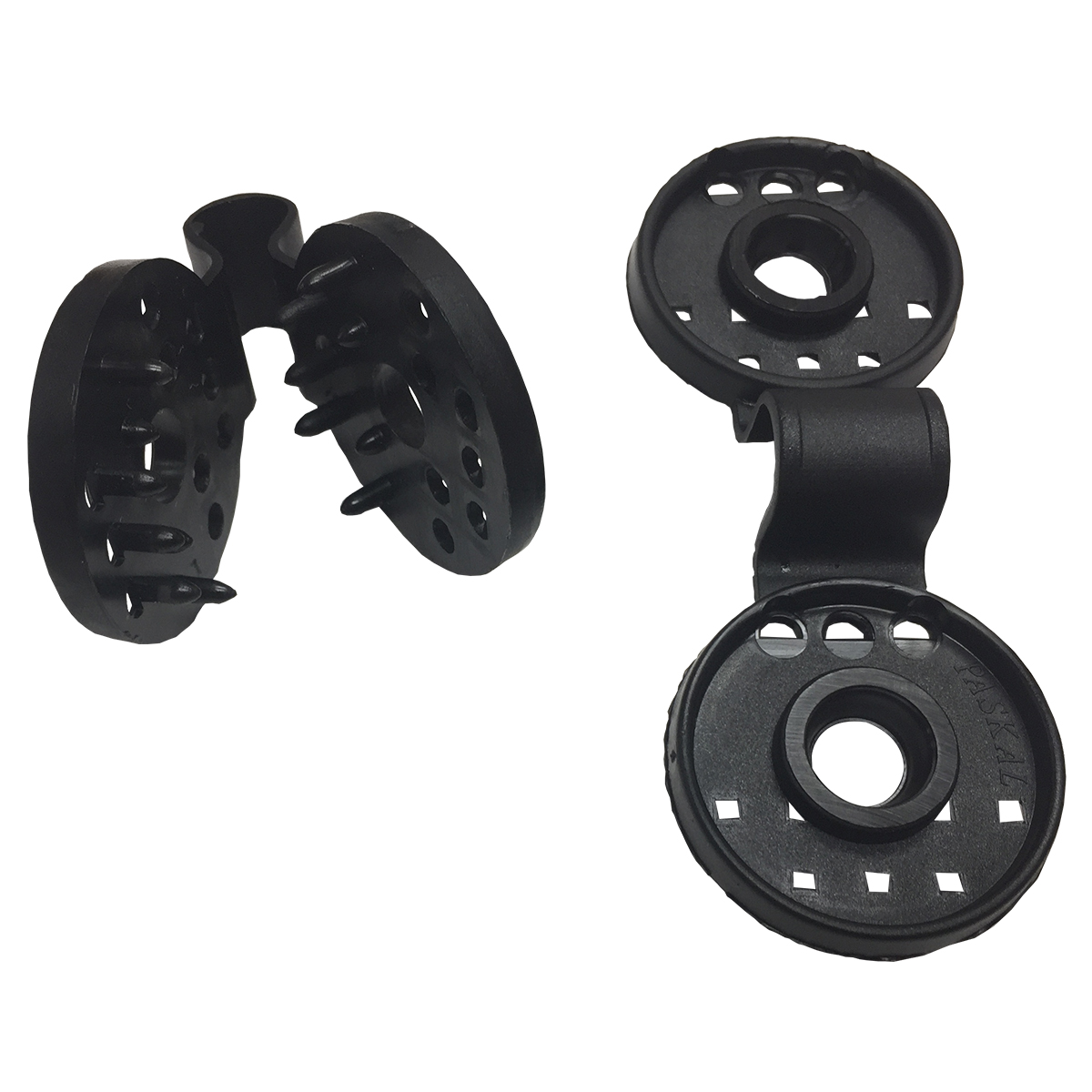 |
Tie-down points on sheeting up to 8 mil | UV-resistant nylon | 20 per bag | View product → |
| Shark Bite Tarp Grommet Fastener | 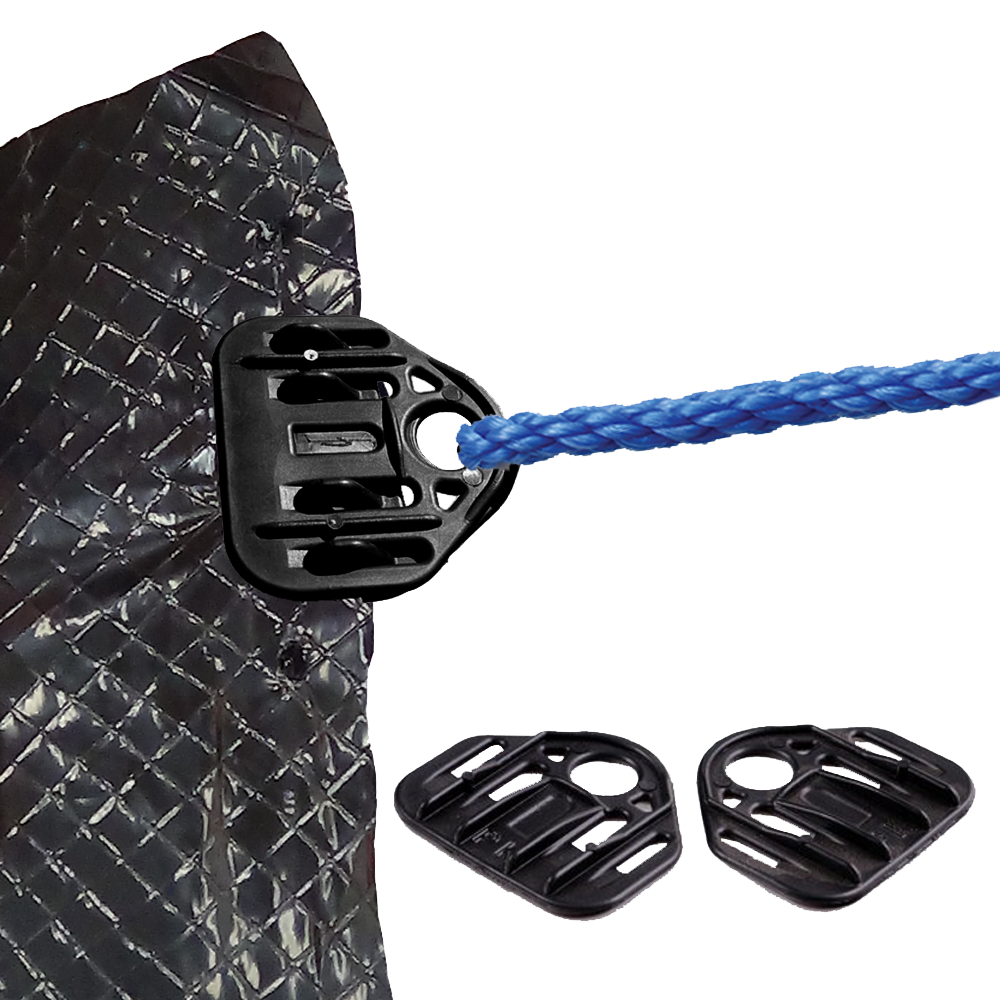 |
Tie-down points on heavier sheeting, up to 20 mil | UV-resistant nylon | 20 per bag | View product → |
| R25B Tape |  |
Sealing seams and patching tears outdoors | UV-stable backing | 4″ x 100′ | View product → |
| 2-Sided Butyl Tape | 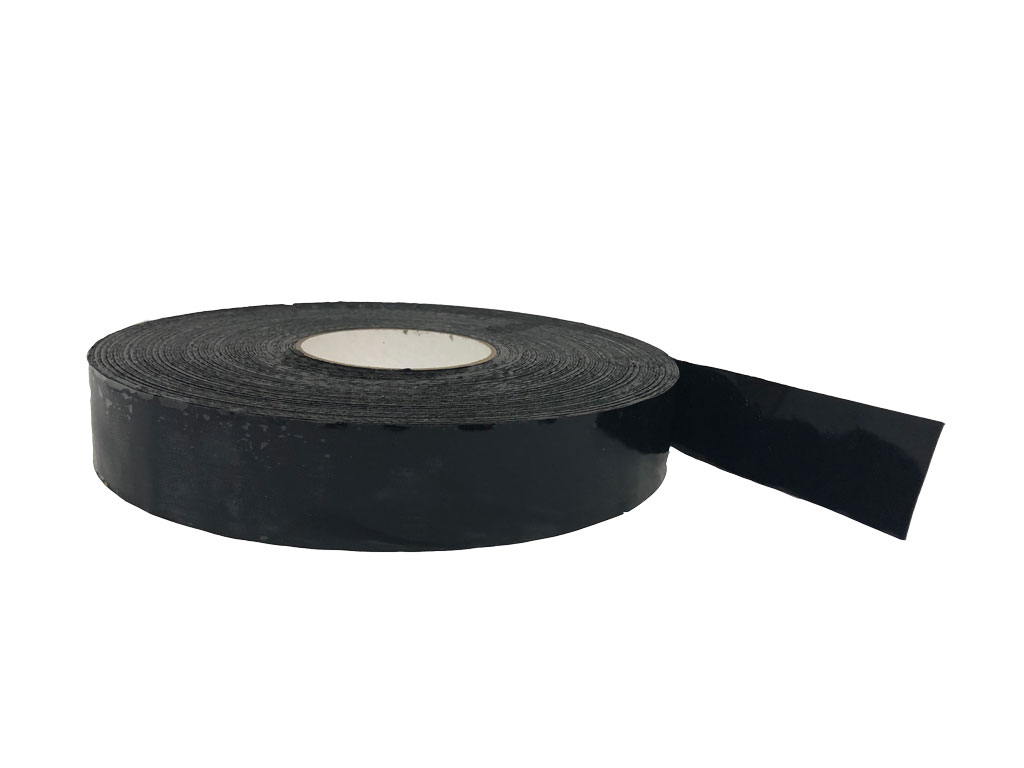 |
Bonding panel overlaps into one continuous cover | Not listed | 1.5″ x 108′ | View product → |
| 3/4″ Woven Cord Strapping | 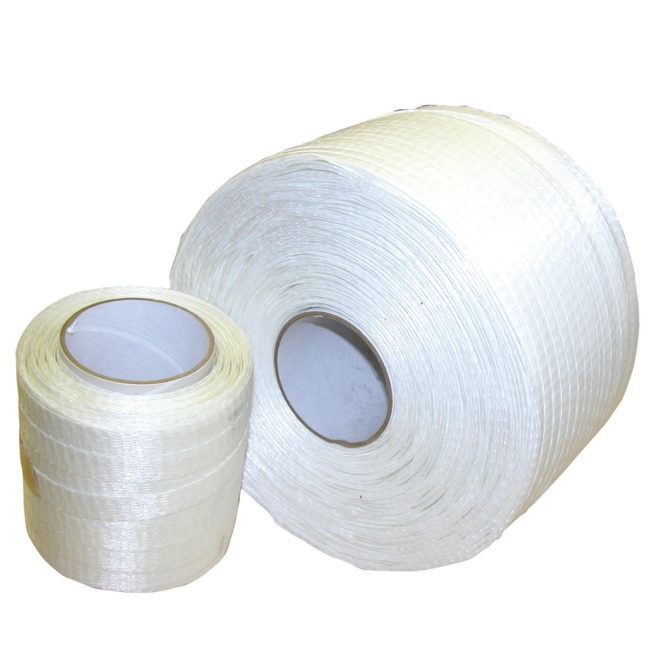 |
Strapping covers over equipment and woodpiles | Not listed | 3/4″ x 2,100′ per roll | View product → |
You’ll also want 2x4s, exterior screws, a utility knife, and a helper.
Before You Start
Good El Niño storm preparation starts with the things that don’t need a ladder. FEMA’s Ready.gov checklist says to clear drains and gutters, move valuables to higher levels, consider a sump pump with battery backup, and keep important documents in a waterproof container. (Ready.gov / FEMA)
Check your flood coverage too. A new flood insurance policy typically takes up to 30 days to take effect, according to Ready.gov. If you live in one of the wetter-than-normal states, buy now. Don’t wait for the first storm warning.
Last, take dated photos of your roof, siding, and yard now. If a storm causes damage later, “before” photos make an insurance claim easier. FEMA also publishes guidance on documenting damage after severe weather.
Step 1: Size the Roof Cover Before You Need It
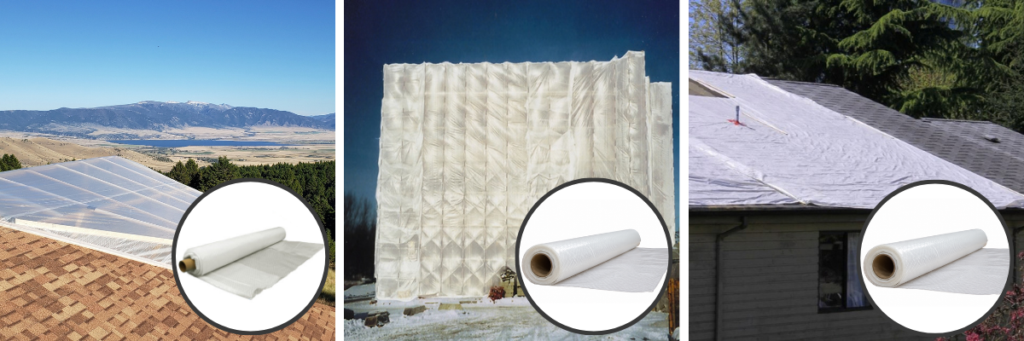
Measure each roof slope from the eave to the ridge, then down the other side. A roof cover works best when it goes over the ridge. That way, water runs off the top of the sheet instead of getting under it. Add a few extra feet on every side so you have material to wrap around boards.
This is where long rolls make a difference. SolaScrim™ comes up to 52.75′ wide, and custom lengths run to 500′. That can cover a whole roof slope in one piece, with no seams to leak. For a single damaged section, a 20′ x 100′ roll of 10 mil Clear Dura-Skrim® gives you enough material for several patches.
Step 2: Anchor With Boards, Not Just Nails
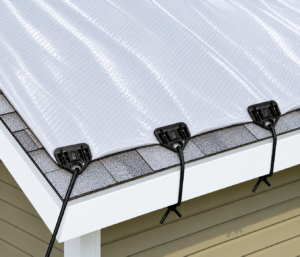
Roll the edge of the sheet around a 2×4 and screw the board down through the plastic. The board spreads the load across the sheet so wind can’t rip it out at each fastener. Put a board at every edge, and add one across the middle of long runs. Where a board won’t work, add tie-down points with Tarp Grippers™ or Shark Bite Tarp Grommet Fasteners. Tarp Grippers™ hold sheeting up to 8 mil. Shark Bites hold up to 20 mil, so use them on the 10 mil roof covers in this guide. In Florida and along the Gulf Coast, where severe weather is more likely this winter, add extra boards.
Step 3: Overlap Like Shingles and Seal the Seams
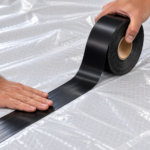 If you need more than one panel, lay the upper panel over the lower one, the same way shingles overlap. Water should always run over a seam, never into it. Bond the overlap with 2-Sided Butyl Tape. Then run R25B Tape along the outside edge. For best results, apply both tapes on a dry day when it’s above 50°F. They can go on in colder weather (R25B down to 35°F and butyl down to 30°F), but they bond best when it’s warmer.
Step 4: Set Up a Plan B Inside
Even a good cover can leak in a long storm. Keep a Leak Diverter Drain Tarp ready. Hang it under the drip, attach a garden hose, and run the water to a bucket, sink, or floor drain. That keeps a small leak from ruining drywall, flooring, and insulation.
Step 5: Temporary Slope Protection for Hillsides and Bare Soil
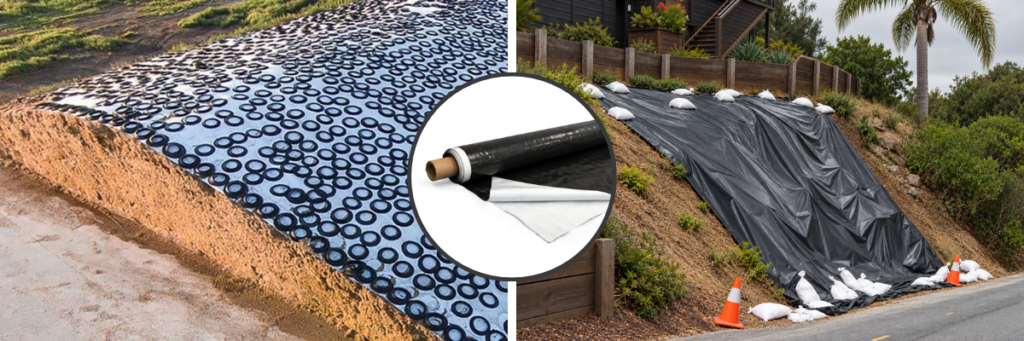
Heavy rain washes out bare dirt fast. A hillside behind the house, a cut bank, or a freshly graded yard can lose soil in a single storm. Hillside erosion prevention starts with covering that soil before the rain hits.
For temporary slope protection, use 6 mil Black White Dura-Skrim®, or 8 mil White/Black Dura-Skrim® for a heavier cover. Lay either one white side up. Here’s how to set it up:
- Start at the top. Bury the top edge in a shallow trench and backfill it so water can’t run under the sheet.
- Overlap like shingles. If you need more than one sheet, lay the upper sheet over the lower one so water runs across the seam, not into it.
- Weigh it down. Use sandbags or tires across the slope so wind can’t lift the sheet.
- Plan the runoff. A covered slope sheds more water at the bottom. Send it to a spot where it can drain safely, never toward your foundation or a neighbor’s property.
- Check it after every storm. Reset loose weights and patch tears with R25B Tape before the next round of rain.
For more on slope covers, see our guide to erosion control materials for slopes and soil.
A warning for hillside homes near recent wildfire burn areas, common in California and the Southwest: plastic sheeting won’t stop a debris flow. The USGS says post-fire debris flows can happen with little warning and can damage buildings and put lives at risk. (USGS) Sheeting helps with surface erosion on small slopes. For debris-flow risk, follow your county’s alerts and evacuation orders.
Step 6: Wrap and Strap Everything Outside
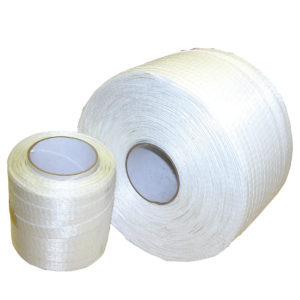
Boats, RVs, generators, firewood, and stacked building materials all need protection too. Heat Shrink Wrap fits tight around odd shapes and holds up to 12 months outdoors. Installing it takes a professional installer with a specialized heat gun like the 998 Shrinkfast Heat Gun, so book one before storm season. It isn’t a do-it-yourself job. For simpler covers, use reinforced sheeting and hold it down with 3/4″ Woven Cord Strapping. It won’t cut the plastic the way wire or steel banding can.
If you have a garden or small farm, don’t forget the greenhouse. For a greenhouse or hoop house you keep running through winter, use SolaScrim™ 4 Year 10 mil Clear Reinforced Greenhouse Cover. Its polyester scrim reinforcement stands up to high winds better than standard greenhouse film. It still lets up to 84% of light through, so plants keep growing while the storms roll in.
Step 7: Build Your Kit
Ready.gov’s basic disaster supply kit already lists “plastic sheeting, scissors and duct tape.” (Ready.gov / FEMA) Keep a spare roll of 6 mil Black White Dura-Skrim®, a roll of R25B Tape, and a bag of Tarp Grippers™ or Shark Bites with that kit. It’s an economical choice for homeowners. With it on hand, you can cover a new roof leak, a broken window, or wet firewood at 2 a.m. without a trip to the store.
Side note: For a longer-lasting solution, use 10 mil Clear Dura-Skrim® instead or 4 Year SolaScrim™.
Common Mistakes
- Assuming your state is safe. Even regions expecting a mild winter have seen wet, stormy El Niño years before.
- Stopping short of the ridge. Water runs down the roof and gets under the top edge of the sheet. Take the cover over the ridge whenever you can.
- Nailing straight through the plastic. Every nail hole becomes a tear point in the wind. Use boards to spread the load.
- Using a cheap tarp on a roof. Thin, unreinforced tarps tear and blow off in storms. Use reinforced sheeting instead.
- Getting on a wet roof. If it’s raining, windy, or steep, wait or call a licensed roofer. No cover is worth a fall.
- Sending runoff somewhere new. A slope cover moves water. Make sure it goes somewhere safe.
Frequently Asked Questions
Which states will El Niño affect most this winter?
NOAA favors a wetter-than-normal winter across the southern U.S., from California and the Southwest through Texas, the Gulf Coast, Georgia, and Florida. The strongest odds, 70 to 80 percent, are in south Georgia and north Florida.
Does El Niño mean a mild winter in the northern U.S.?
Usually. NOAA favors warmer-than-normal temperatures across the northern tier, with slightly drier conditions in the interior Northwest and Great Lakes. It’s a tilt in the odds, not a guarantee.
What is the best plastic sheeting to cover a roof before a storm?
Use reinforced, UV-stabilized sheeting, not a cheap tarp. SolaScrim™ 4 Year 10 mil Clear works for longer or larger jobs, and 10 mil Clear Dura-Skrim® works for emergency covers up to a year.
How long can plastic sheeting stay on a roof?
It depends on the UV rating. 10 mil Clear Dura-Skrim® is rated up to one year outdoors, and SolaScrim™ is rated up to four years.
How do I keep plastic sheeting from blowing off in the wind?
Wrap the edges around 2×4 boards and screw the boards down. Add Tarp Grippers™ or Shark Bites for extra tie-down points, and seal seams with butyl and R25B tape.
What should El Niño storm preparation include?
Clear gutters and drains, check your flood insurance early, and stock a UV-rated roof cover before you need it. Cover bare slopes, and keep plastic sheeting and tape in your disaster kit, as Ready.gov recommends.
Finish Your El Niño Storm Preparation Before the Rain Arrives
Stock rolls ship fast, and wide or long custom panels take a few weeks. Order now, before the first storm. Shop reinforced plastic sheeting for storm protection →