
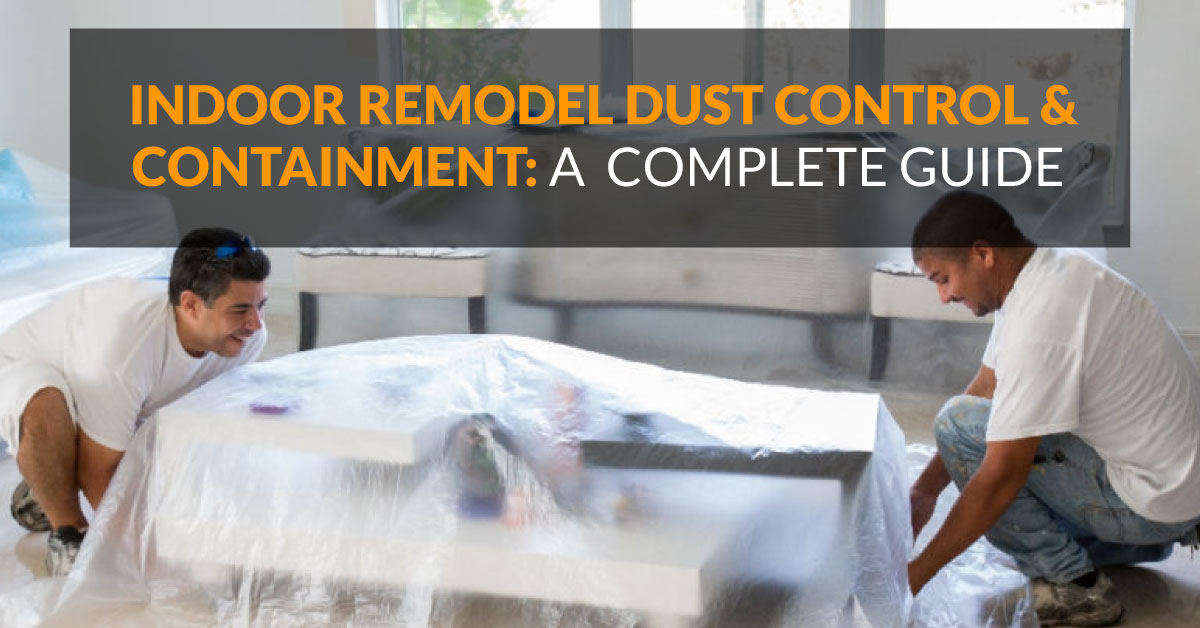
What actually triggers a legal dust control requirement on a renovation job — and why the sequence of your containment system matters more than which mil thickness you grab off the shelf.
Most dust control conversations start in the wrong place. Someone asks “what mil thickness do I need,” when the better first question is “what’s actually required here, and in what order does it go up.” A renovation that’s covered in poly but poorly sequenced still leaks dust into occupied space. A renovation that skips a legal trigger — lead paint, silica-generating cuts — carries liability no material spec fixes after the fact.
This is the planning side of dust control: what regulations actually apply, how a containment system is built in layers, and where crews lose the fight even with the right material on hand.
What Is a Dust Control Program?
A dust control program is the plan for keeping dust inside the work area and out of everywhere else — furniture, HVAC systems, adjoining occupied rooms, and lungs. That’s different from “putting up some plastic.” A program has a sequence: isolate the space, seal the openings, protect what can’t be moved, and control what walks out the door on people’s boots. Skip a layer and the other three compensate for it badly.
How It Works: The Four Layers of Containment
1. The barrier. Reinforced sheeting isolates the work area from the rest of the structure — ceiling to floor, wall to wall. This is the layer most people think of first, and it’s the one that gets the most attention relative to its actual importance.
2. Seams and openings. A barrier is only as good as its weakest seam. Doorways, HVAC vents, and panel overlaps need to be taped or zippered shut, not just draped closed. This is also where fire-retardant sheeting and tape matter — if the AHJ requires NFPA 701 or UL 214 compliance for the space, it has to show up here, not just on the main barrier panel.
3. Floor and surface protection. Self-adhesive film on countertops, carpet cover on flooring, wall cover on trim and doorways — this layer protects what’s inside the barrier and what’s just outside it, since dust and foot traffic don’t respect the containment line perfectly.
4. Entry-point control. Tacky mats at every access point catch what the first three layers miss: dust riding out on boots and cart wheels. This is the layer crews skip most often, and it’s usually the reason dust shows up two rooms away from a “fully contained” job.
Standards: What Actually Triggers a Legal Requirement
Two federal rules are the ones that turn “good practice” into “required practice” on a renovation:
- EPA’s Renovation, Repair, and Painting (RRP) Rule (40 CFR Part 745, Subpart E) applies to paid work on housing and child-occupied facilities built before 1978. It’s triggered by disturbing more than 6 square feet of interior painted surface per room, more than 20 square feet of exterior painted surface, or any window replacement or demolition of painted surfaces — the last two trigger it regardless of square footage. Once triggered, the work area has to be contained well enough that dust and debris don’t leave it, using an EPA-certified renovator on site. (EPA)
- OSHA’s Respirable Crystalline Silica standard (29 CFR 1926.1153) applies whenever a task generates silica dust — cutting concrete, block, brick, or stone. The permissible exposure limit is 50 µg/m³ over an 8-hour average, with an action level of 25 µg/m³. For tasks listed on the standard’s Table 1, compliance means fully implementing the specified engineering controls: wet cutting methods, HEPA-filtered vacuum dust collection, and for enclosed or indoor tasks, exhaust sufficient to keep visible dust from accumulating. (OSHA)
Specifications: The Containment Stack
Here’s one product from each layer, so the sequence above maps to something you can actually order:
| Layer | Product | Image | Key Spec |
|---|---|---|---|
| Barrier | 6 Mil Dura-Skrim® Reinforced Plastic Sheeting | 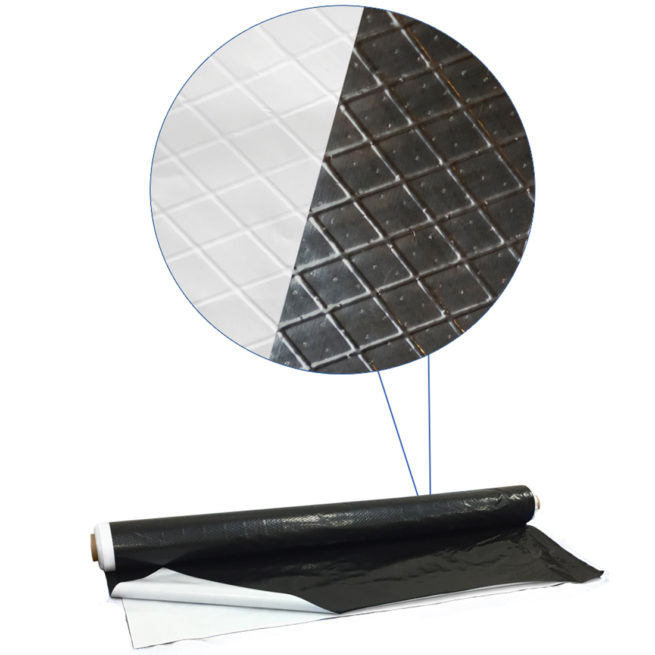 |
ASTM E96-certified, reinforced 6 mil |
| Seams & code compliance | Antistatic Fire Retardant Plastic Sheeting (ASFR6) |  |
Meets NFPA 701, UL 214, ASTM E84 |
| Surface protection | Multi Surface Cover Self-Adhesive Protection Film | 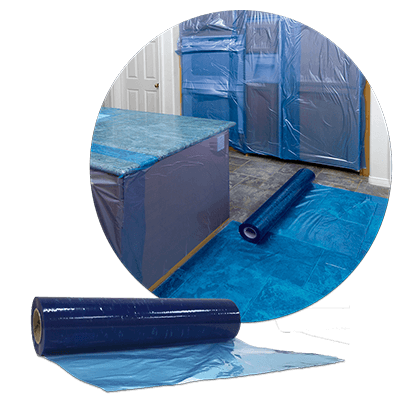 |
3 mil, clean removal up to 45 days |
| Entry-point control | Sticky Mats™ Refill Pack | 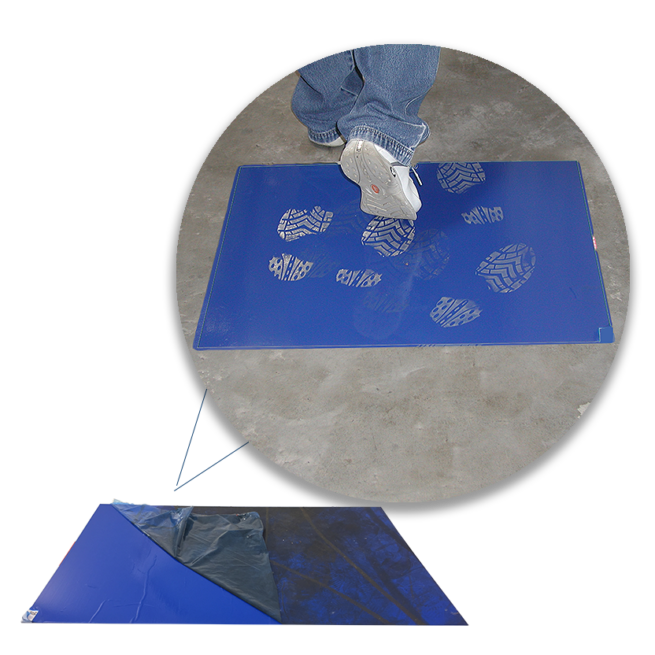 |
30 peel-away layers per pad, 120 per refill pack |
Practical Applications
General remodel, no lead or silica concerns: Standard reinforced sheeting for the barrier, standard tape for seams, surface film and mats for the rest. No code-driven material required.
Pre-1978 structure, any paint disturbance: Treat the RRP Rule as active unless a test says otherwise. Containment has to hold — no torn or displaced sheeting — for the duration of the job.
Concrete cutting, grinding, or drilling: The barrier keeps dust from spreading; it doesn’t substitute for the wet-cutting or HEPA-vacuum controls OSHA’s Table 1 requires at the tool itself.
Occupied commercial, healthcare, or telecom space: Fire-retardant and antistatic sheeting is often required by the AHJ or facility policy, not optional based on preference.
Frequently Asked Questions
Does OSHA require dust containment sheeting during renovation?
Not directly. OSHA’s silica standard (29 CFR 1926.1153) requires engineering controls at the source of silica-generating tasks — wet cutting, HEPA vacuums, exhaust in enclosed spaces. A containment barrier supports a clean jobsite but doesn’t replace those source controls.
What triggers the EPA’s lead-safe renovation requirements?
Paid work on a pre-1978 structure that disturbs more than 6 square feet of interior painted surface, more than 20 square feet of exterior painted surface, or any window replacement or demolition of painted surfaces, regardless of size.
What thickness of plastic sheeting should I use for a dust barrier?
6 mil reinforced sheeting is the common baseline for standard containment barriers. The right thickness depends on traffic, duration, and whether fire or static requirements apply — see our material selection guide for a full breakdown by scenario.
Do I need fire-retardant sheeting for a standard home renovation?
Usually not, unless the AHJ or facility requires it. It becomes necessary in healthcare, telecom, data center, and many commercial or multi-tenant occupied-building projects.
How long can surface protection film stay down during a project?
Self-adhesive films like Multi Surface Cover are rated for clean removal up to 45 days. For longer projects, plan a mid-project inspection rather than assuming the adhesive holds indefinitely.
Get Your Containment System Right, Not Just Covered
Whether you’re sourcing one layer or building the full stack, Americover ships American-made containment materials with the certifications your AHJ will ask for. Browse antistatic and fire-retardant containment sheeting → Or call 760-388-6294 to talk through what your specific project requires.