
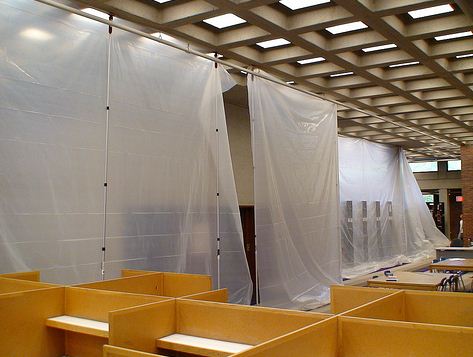
Dust containment plays a critical role in maintaining air quality and preventing contamination. However, choosing the right plastic sheeting depends on several factors, including environment, risk level, and project goals.
Before selecting a material, consider how the space will be used. In addition, evaluate durability requirements, safety codes, and installation conditions.
💡 Start Here: The best dust containment system balances durability, compliance, and ease of installation—not just thickness.
- Do you require fire-retardant materials for code compliance?
- Will foot traffic or equipment damage the barrier?
- Are you working in an ESD-sensitive environment?
- Do you need privacy or visual containment?
- Will the system be exposed to UV or outdoor conditions?
- Will you use negative air machines?
Because no single material fits every job, understanding your application helps you choose the right solution.
Best Plastic Sheeting for Dust Containment Systems
6 Mil String-Reinforced Plastic Sheeting
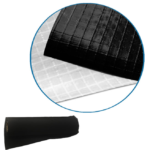 6 mil string-reinforced sheeting is the most common choice for dust containment. It meets the typical 6 mil requirement while offering added durability.
Best for: Temporary containment, dust barriers, and wall coverings
In addition, reinforced construction improves durability without adding weight. As a result, installation becomes faster and more reliable.
Installation Tip: Use pole systems or secure taping methods to prevent gaps and air leaks.
📘 Why it works: Reinforcement adds strength without extra weight, making it easier to install and less likely to tear.
—
10 Mil Heavy-Duty Plastic Sheeting
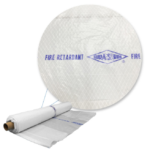 10 mil heavy-duty sheeting provides added protection in demanding environments.
Best for: High-traffic areas, long-term containment, or rough job sites
Installation Tip: Anchor securely and reinforce seams to prevent sagging or failure.
⚠️ Contractor Insight: Thicker material reduces punctures, but proper installation still determines performance.
—
Fire-Retardant & Antistatic Sheeting
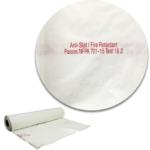 Antistatic fire-retardant sheeting is required in regulated environments.
Best for: Hospitals, data centers, telecom, and commercial renovations
Installation Tip: Confirm compliance with NFPA 701 or UL 214 before installation.
- Dust containment and partitions
- Equipment protection in sensitive environments
- Temporary walls and enclosures
💡 Pro Tip: Antistatic properties help prevent dust from clinging to surfaces, improving cleanliness.
Specialized Surface Protection for Dust Control
Rapid Wall Cover Pre-Taped Poly
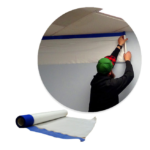 Rapid Wall Cover installs quickly and removes cleanly.
Best for: Walls, doors, cabinets, and furniture protection
Installation Tip: Apply in sections for faster coverage and better alignment.
—
Carpet Cover Protection Film
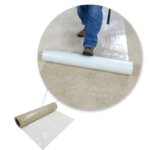 Carpet Cover Film protects flooring during renovations.
Best for: Residential remodels and high-traffic areas
Installation Tip: Apply smoothly to avoid wrinkles that trap dirt.
—
Multi-Surface Protection Film
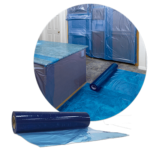 Multi-Surface Cover protects hard surfaces like countertops and fixtures.
Best for: Large-scale projects and multi-surface coverage
Installation Tip: Apply evenly to ensure consistent adhesion and clean removal.
Additional Materials for Dust Containment
Correx® Boards
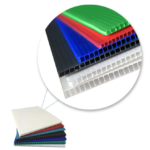 Correx® Boards provide rigid protection for floors and surfaces.
Best for: Reusable floor protection and heavy-duty coverage
—
Duct & HVAC Covers
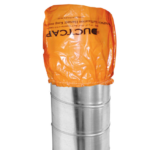 DuctCap Covers prevent dust from entering HVAC systems.
Best for: Commercial construction and renovation projects
—
Sticky Mats
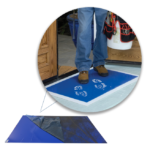 Sticky Mats trap dust from shoes before it spreads.
Best for: Entry points and controlled environments
📘 Best Practice: Combine containment barriers with floor protection and entry controls for maximum effectiveness.
Trusted by Builders and Contractors
Americover provides high-performance plastic sheeting designed for real jobsite conditions.
📞 Call 760-388-6294 or contact us to get started.