
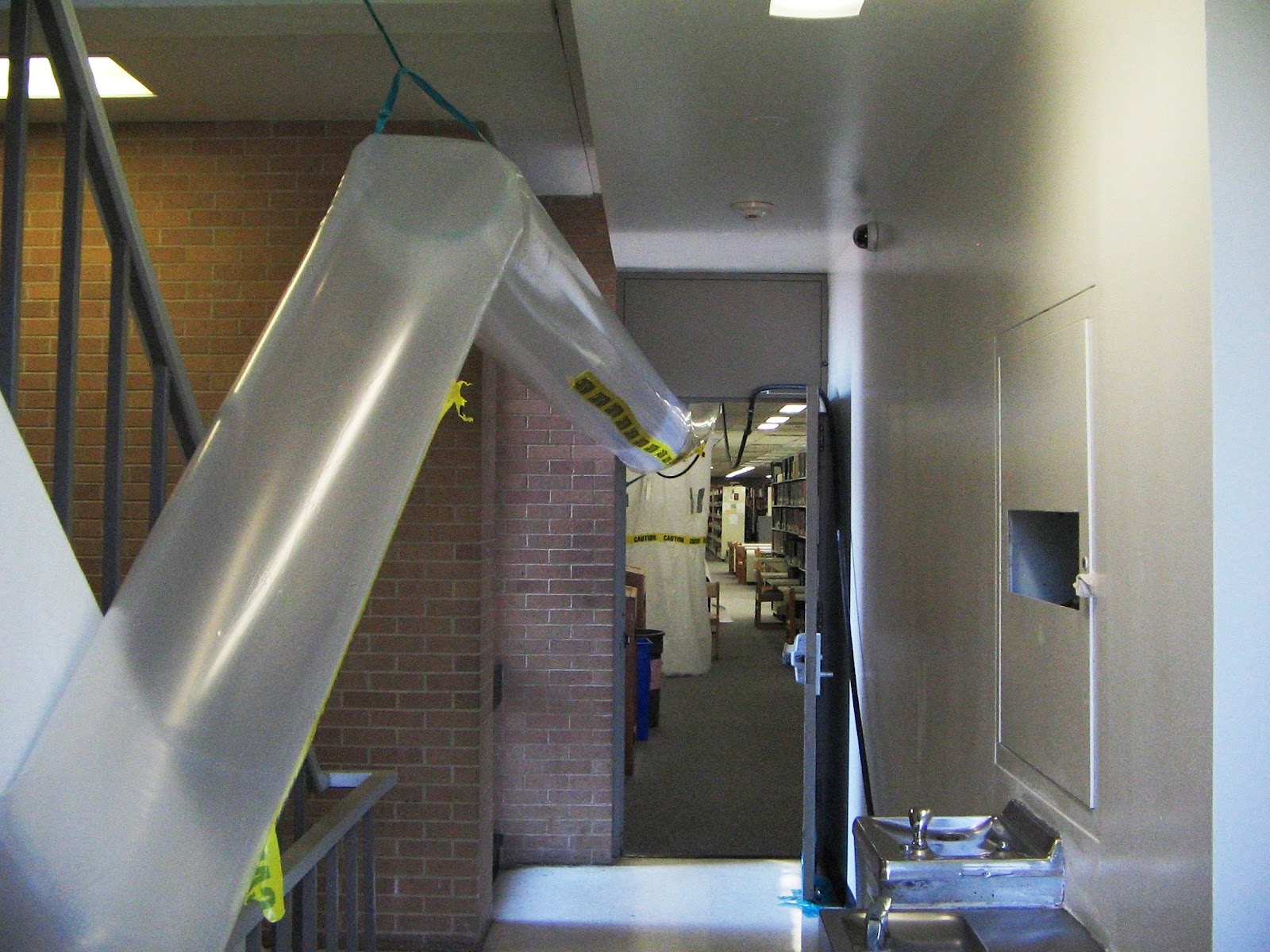
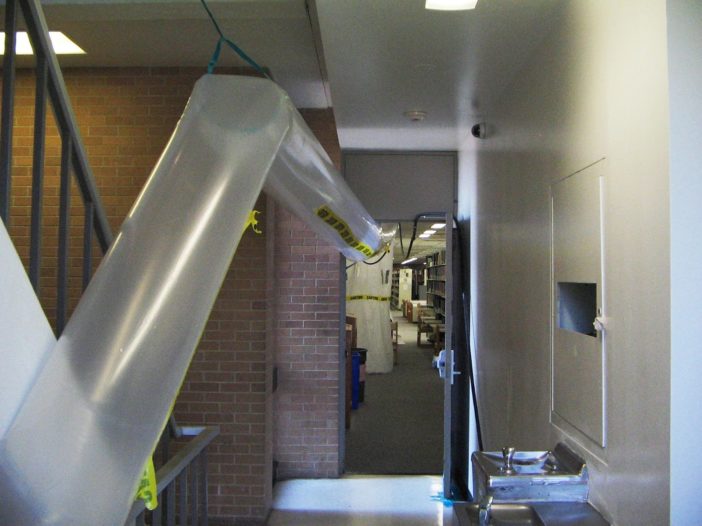
Mold containment is a critical part of abatement and remediation work. When mold is disturbed, spores can become airborne and move into adjacent spaces. Because of that, contractors need a containment system that helps reduce the risk of cross-contamination during removal.
Plastic sheeting for mold containment is one of the most common and effective ways to isolate the work area. In addition, the right material helps crews maintain cleaner job sites, protect occupants, and support safer remediation practices.
⚠️ Health Risk: Mold exposure can contribute to respiratory irritation, allergic responses, and other indoor air quality concerns. Proper containment helps reduce the risk of spores spreading during remediation.
Why Mold Containment Matters
Mold containment is important because remediation work often disturbs contaminated materials. As a result, spores can spread through air movement, foot traffic, and HVAC pathways if the work area is not isolated.
- Helps reduce cross-contamination to clean areas
- Supports negative air and controlled airflow strategies
- Protects occupants, workers, and sensitive environments
- Improves cleanliness and jobsite control during removal
💡 Best Practice: Mold containment works best when plastic barriers, sealed penetrations, and negative air are used together.
Construction Applications That Commonly Require Mold Containment
Mold containment is not limited to dedicated remediation companies. In many cases, general contractors and restoration teams also need containment when they open up damaged assemblies or work in moisture-prone environments.
- Water damage restoration and flood cleanup
- Demolition of drywall, insulation, or ceiling systems with suspected mold
- Basement, crawl space, and slab-edge remediation
- Multifamily renovation after leaks or tenant turnover
- School and municipal building repairs
- Healthcare renovation and maintenance work
Who uses it? Mold remediation contractors, restoration companies, general contractors, facility maintenance teams, healthcare construction crews, property managers, and environmental consultants all rely on mold containment systems.
What Are the Two Types of Mold Containment?
According to the EPA, mold remediation containment is typically described as either limited or full containment. The choice depends on the size of the affected area, the likelihood of spore spread, and the exposure risk.
| Containment Type | Typical Area Size | Common Features | Best Use Case |
|---|---|---|---|
| Limited Containment | 10–100 sq. ft. | Single layer of polyethylene, sealed access slit, vents and openings covered | Smaller remediation areas with lower spread risk |
| Full Containment | Over 100 sq. ft. or higher-risk conditions | Double-layer barriers, airlock entry, sealed penetrations, negative air | Larger projects or spaces with elevated contamination risk |
Limited Containment
Limited containment is commonly used for smaller mold remediation areas. Typically, installers run plastic sheeting from the ceiling to the floor and seal all openings around vents, doors, pipes, and transitions.
Light installation tip: Use airtight tape and make sure the barrier extends far enough to isolate the full work zone, not just the visibly damaged surface.
Full Containment
Full containment is used for larger areas or when contamination is more likely to spread. In most cases, crews build double-layer containment walls and access the work area through an airlock entry. Negative air is then used to maintain inward airflow.
Light installation tip: Seal every penetration, including floor transitions and ceiling lines, before starting negative air equipment.
📘 Compliance Insight: EPA guidance outlines limited and full containment by project size, while the ANSI/IICRC S520 Standard is widely treated as the professional standard of care for mold remediation.
Compliance & Standards for Mold Containment
Mold containment is guided by recognized industry standards and safety recommendations. Therefore, choosing the right barrier system is not only a performance issue—it is also a compliance and risk-management decision.
EPA Mold Remediation Guidance
The EPA recommends limited containment for mold-contaminated areas of 10 to 100 square feet and full containment for areas larger than 100 square feet or where elevated exposure is expected. The EPA also describes full containment as requiring double layers of polyethylene sheeting.
IICRC S520 Standard
The ANSI/IICRC S520 Standard covers professional mold remediation principles and supports the use of engineering controls such as containment and pressure management. In practice, many remediation contractors use S520 as the benchmark for job planning and execution.
OSHA Workplace Safety Expectations
OSHA does not prescribe one exact mold containment method. However, OSHA does require employers to control airborne hazards and maintain safe working conditions. Because remediation work can make mold spores airborne, containment is commonly used to reduce worker exposure.
ICRA for Healthcare Jobs
In healthcare construction and renovation, Infection Control Risk Assessment (ICRA) protocols are used to reduce dust and airborne pathogen migration near patient care areas. ICRA guidance calls for barriers that prevent dust release, remain secure, extend appropriately, and have sealed penetrations. For higher-risk work, barriers may also need to satisfy fire-rating-related project requirements.
⚠️ Healthcare Note: If your project is in a hospital, clinic, or occupied care environment, confirm ICRA requirements before selecting containment materials.
What Is the Best Plastic Sheeting for Mold Containment?
For many jobs, plastic sheeting used for mold containment should be at least 6 mil thick. From there, the best choice depends on your project conditions, code requirements, and installation method. EPA guidance for limited containment specifically references 6-mil fire-retardant polyethylene sheeting.
Below are some of the best Americover options for limited and full containment systems.
BearAcade® Heavy Duty Surface Protection Film
BearAcade® Heavy Duty Surface Protection Film
Best for: Floor, wall, and surface protection inside contained areas
Why it stands out: Its self-adhesive design helps reduce billowing and supports negative pressure retention.
Installation tip: Apply to clean surfaces and smooth out air pockets to maintain a tight fit.
Antistatic Fire Retardant Plastic Sheeting
Antistatic Fire Retardant Plastic Sheeting
Best for: Data centers, telecom rooms, healthcare work, and commercial interiors
Why it stands out: It combines fire-retardant properties with antistatic performance for sensitive environments.
Installation tip: Pair with pole systems or sealed framing when building temporary containment walls.
6 Mil Dura Skrim® Fire Retardant Reinforced Plastic Sheeting
6 Mil Dura Skrim® Fire Retardant Reinforced Plastic Sheeting
Best for: Limited containment, temporary barriers, and pole-mounted systems
Why it stands out: Reinforcement helps resist punctures and tears while staying lightweight enough for faster installation.
Installation tip: Ideal when you need durability without moving up to a much heavier film.
8 Mil Black Fire Retardant Plastic Sheeting
8 Mil Black Fire Retardant Plastic Sheeting
Best for: Projects that need privacy, visual screening, or hidden work zones
Why it stands out: The black opacity helps conceal the work area while maintaining lightweight handling.
Installation tip: Useful when the job site is occupied and aesthetics matter.
10 Mil Dura Skrim® Fire Retardant Reinforced Plastic Sheeting
10 Mil Dura Skrim® Fire Retardant Reinforced Plastic Sheeting
Best for: Full containment, longer jobs, and rougher jobsite conditions
Why it stands out: The reinforced scrim helps prevent tearing and supports higher-demand installations.
Installation tip: A strong choice for larger rooms, airlocks, and repeated-entry environments.
10 Mil Pro Crawl™ Anti-Mold Vapor Barrier with MPT™
10 Mil Pro Crawl™ Anti-Mold Vapor Barrier with MPT™
Best for: Crawl spaces, basements, enclosed low-clearance areas, and moisture-prone environments
Why it stands out: It helps prevent mold and fungus growth on the surface of the material itself, which makes it especially valuable where persistent moisture is part of the jobsite condition.
Use-case scenario: When a contractor is not only containing a mold issue, but also trying to prevent future growth in the enclosed environment, Pro Crawl Anti-Mold is a particularly strong fit.
💡 Application Insight: Standard plastic creates a barrier. Pro Crawl Anti-Mold goes a step further by helping protect the material surface itself in damp, enclosed spaces.
Internal Resources for Planning Your Containment System
- Dust containment renovation products
- How reinforced plastic sheeting is used in construction
- Fire retardant plastic sheeting
- Vapor barriers
Frequently Asked Questions About Mold Containment
What thickness plastic is typically used for mold containment?
Most mold containment jobs use a minimum of 6 mil plastic. However, reinforced and thicker materials are often better for full containment or rough jobsite conditions.
When is full containment required?
Full containment is generally used for contaminated areas larger than 100 square feet or for projects where there is a higher risk of spore spread.
Do I need negative air for mold containment?
Negative air is commonly used with full containment because it helps maintain inward airflow and reduce the chance of contaminants escaping the work area.
Can mold grow on plastic sheeting?
Yes, mold can grow on plastic surfaces under the right conditions. That is why anti-mold treated materials can be useful in wet or enclosed environments.
What standards should contractors know?
EPA guidance, ANSI/IICRC S520, OSHA workplace safety expectations, and ICRA requirements for healthcare jobs are all important references depending on the project type.
Trusted by Growers, Builders, and Distributors
Americover is the smart source for plastic and polyethylene sheeting. Contractors, restoration teams, and facility professionals rely on our materials for containment, protection, and performance in real jobsite conditions.
If you need help choosing the right material for your mold containment system, call 760-388-6294 or contact us.